
2026 Money Checklist: Your Top Essential Financial Steps to Complete This Year.
THIS ARTICLE MAY CONTAIN AFFILIATE LINKS, MEANING I GET A COMMISSION IF YOU DECIDE TO MAKE A PURCHASE THROUGH MY LINKS AT NO COST TO YOU. PLEASE READ MY AFFILIATE DISCLOSURE FOR MORE INFO.
DON’T HAVE TIME TO READ THE FULL ARTICLE. HERE’S WHAT YOU ARE MISSING.
- 2026 Money Checklist: Your Top Essential Financial Steps to Complete This Year.
- Your 2026 Money Checklist: Top Essential Steps to Financial Success for Individuals Ready to Build Wealth.
- Update Your Money Management Strategy
- Boost Your Savings Performance
- Check Your Credit and Fix Problems
- Review and Adjust Your Coverage Strategy
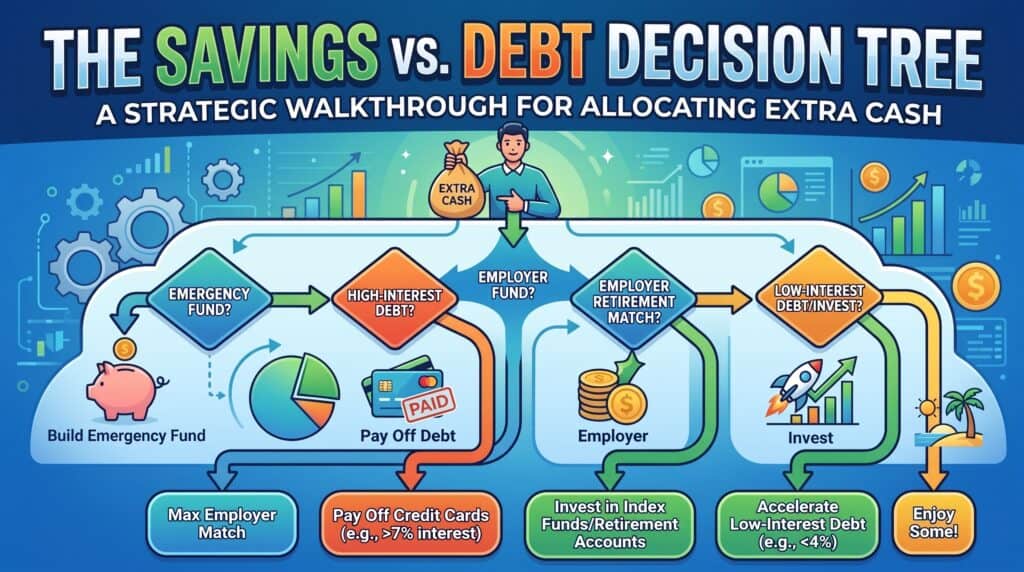
- Build & Grow Your Emergency Fund
- Build Your Investment Portfolio in 2026
- Tackle High-Interest Debt Aggressively
- Prepare for Significant Future Costs
- Fine-Tune Your Tax Approach for 2026
- Protect Your Financial Future
- Increase Your Income Capacity
- Strengthen Your Money Skills
- Put Your Finances on Autopilot
- Review and Refresh Your Financial Targets
- Recognize Your Progress and Push Forward
- Common Financial Questions Answered
Building wealth in 2026 takes more than good intentions. You need a real plan that covers every part of your financial life.
A complete financial checklist helps you tackle the big stuff that actually changes your bank balance. Managing debt, growing savings, and other key steps all push you closer to your money goals.

This guide walks you through the top practical steps for anyone ready to take control of their finances. You’ll see how to build an emergency fund, boost your credit, invest smarter, and protect your hard-earned money.
These steps work together to build a solid foundation for long-term wealth. Maybe you’re just starting out, or maybe you want to tighten up your finances—either way, this checklist gives you real tools to move forward.
Key Takeaways
- A complete financial checklist helps you manage all parts of your money from spending to investing.
- Following these top essential steps can strengthen your financial foundation and help you build long-term wealth.
- Tackling key areas like debt, savings, and tax planning makes a real difference in your finances.
Your 2026 Money Checklist: Top Essential Steps to Financial Success for Individuals Ready to Build Wealth.

Update Your Money Management Strategy

Getting your finances on track starts with knowing where your money actually goes. You need a system that fits your lifestyle and income pattern.
If you can’t see your spending habits clearly, building wealth is almost impossible. Let’s be honest, most of us miss the details when we try to keep track in our heads.
Pick Financial Tracking Methods That Fit Your Life
The best budgeting system is the one you’ll stick with. Spreadsheet fans can grab free templates and tweak them to fit their needs.
Google Sheets and Excel both offer budget templates you can customize for your own income and expenses. If you like automation, budgeting apps connect straight to your bank accounts and sort things for you.
These apps send alerts when you’re close to overspending. Some of the most popular options include:
- YNAB (You Need A Budget)
- Credit Karma
- EveryDollar
- Mint
- PocketGuard
Honestly, consistency is everything here. Choose a tool you’ll actually use each week.
A fancy app that just sits on your phone is useless compared to a simple spreadsheet you update regularly. For folks with unpredictable income, zero-based budgeting helps a ton.
This method gives every dollar a job before the month starts. Whether it’s rent, savings, or business costs, you decide where your cash goes—no matter how much you earn that month.
Record All Expenditures
Try logging every single purchase for a full 30 days. That means your morning coffee, streaming subscriptions, those last-minute checkout buys, and even cash you spend.
Most people underestimate what they really spend by 20-30% if they just guess. Writing it all down shows you patterns you wouldn’t spot otherwise.
You might realize you drop $200 a month on takeout or $75 on services you barely use. These little surprises only show up when you look at the real numbers.
Weekly Review Process:
- Download your bank statements
- Check credit card transactions
- Log cash purchases from receipts
- Update your budget categories
- Spot anything out of the ordinary
Pick a set time each week for your review. Sunday evenings or Friday mornings work for a lot of people, but any day is fine as long as you stick with it.
Realign Budget Categories With Current Needs
Your budget should change as your life does. Monthly check-ins let you adjust based on what you’re really spending, not what you thought you’d spend.
If you save money by working from home, shift that cash toward paying off debt or investing. Look at your last three months of spending to set realistic categories.
There’s no point in budgeting $100 for groceries if you always spend $350. That just sets you up to fail.
Essential Category Adjustments:
| Expense Type | Monthly Allocation Method |
|---|---|
| Car maintenance | Annual cost ÷ 12 months |
| Insurance premiums | Yearly total ÷ 12 months |
| Holiday gifts | Estimated yearly spending ÷ 12 months |
| Medical costs | Average quarterly expense ÷ 3 months |
Setting up categories for irregular expenses keeps surprise costs from wrecking your budget. Figure out the yearly cost, divide by 12, and stash that amount every month.
This turns unpredictable bills into manageable monthly items. The 50/30/20 budgeting rule is a flexible way to split your income—half for needs, 30% for wants, and 20% for savings or debt.
Feel free to tweak those percentages so they fit your goals and your reality.
Maximize Employer Retirement Contributions
Employer matching is free money, but you have to claim it. Companies usually match between 25% and 100% of what you contribute, up to a certain percent of your salary.
Check your HR department for the exact formula. If your employer matches 100% of the first 6% you put in, you need to contribute at least 6% to get the full benefit.
Some companies match dollar-for-dollar, some use a different system. Either way, not grabbing the full match means leaving money on the table.
Sign up and set up automatic payroll deductions. When money goes straight from your paycheck to your retirement account, you never get the chance to spend it.
Boost Your Retirement Savings Rate
The 2026 limit for 401(k) contributions is $23,500. If you’re 50 or older, you can add another $7,500 as a catch-up.
Start by contributing enough to get the full employer match. After that, try bumping up your contribution by 1-2% each year.
Many plans let you set automatic annual increases, so you don’t have to remember to do it. If you get a raise or a bonus, increase your contribution right away before you adjust your lifestyle.
Money you never see in your regular budget is much easier to save. Here’s a simple way to ramp up:
- Year 1: Contribute 6% (employer matches 6%)
- Year 2: Go to 7% after a raise
- Year 3: Move up to 8% after your next raise
- Year 4: Hit 10% after a bonus or promotion
This slow-and-steady method lets you build up retirement savings without big lifestyle shocks. Tiny increases add up a lot over time, especially if you stick with it for decades.
Boost Your Savings Performance

Switch to Accounts That Pay You More
Your money should earn something for you, not just sit in a low-interest account. Most traditional banks pay less than 0.10% interest on savings—basically nothing.
Online banks are offering 4% to 5% right now. The difference is huge: $10,000 in a regular account might earn $10 a year, but at 4.5% you’re looking at about $450.
Online banks can offer better rates because they don’t have the overhead of branches. Your deposits are still protected by FDIC insurance up to $250,000 per account.
Opening an account is quick—maybe 15 minutes. Transferring money from your old bank usually wraps up in two or three business days.
What to check before you switch:
- Annual percentage yield (APY) – Shop around for the best rates
- Monthly fees – Look for accounts with no maintenance fees
- Minimum balance requirements – Some accounts need a certain balance for top rates
- Withdrawal limits – Federal rules may limit some transactions
- Mobile app quality – Good apps make managing your money easier
Read the fine print. Some high-yield accounts limit monthly withdrawals or require a minimum deposit to open. Don’t let the details catch you off guard.
Set Up Automatic Deposits
Set up recurring transfers from checking to savings right after each payday. When money moves automatically, you’re less likely to spend it on impulse.
Start with an amount that fits your budget. Even $25 per paycheck adds up over time.
Most banks let you schedule these transfers through their website or mobile app.
Steps to automate your savings:
- Log in to your bank’s online platform.
- Go to transfers or payments.
- Pick your checking and savings accounts.
- Choose your transfer amount.
- Set the date for one or two days after payday.
- Match the frequency to your pay schedule.
Every few months, try bumping your transfer up by $10 or $25. Gradual increases help your savings grow faster, and honestly, you’ll barely notice the change.
It’s easier to adjust to small steps than to make one big leap.
Check Your Credit and Fix Problems

Get Reports From Each Credit Agency
You can check your credit reports for free. Head to AnnualCreditReport.com and get your reports from Equifax, Experian, and TransUnion every week at no cost.
Equifax gives you six bonus reports through the end of 2026. Each agency collects information a bit differently, so one report might show errors the others miss.
Make a plan to pull all three reports at once, or check one every four months to keep tabs year-round. Your report shows every credit account, your payment history, and who’s checked your credit.
Dig through each section, including your address and work history. It takes some time, but finding mistakes early can really save you.
Fix Mistakes and Report Fraud
Credit report errors pop up more than you’d think—and they can drop your score unfairly. Look for accounts you never opened, incorrect payment records, or debts that aren’t yours.
If you spot a problem, send a dispute straight to the credit agency with the error. Their websites let you file online, and by law, they have to investigate within 30 days.
Upload copies of anything that proves your side, like receipts or police reports if you’re dealing with identity theft.
Watch for these common mistakes:
- Accounts from someone with a similar name
- Paid-off debts still showing as active
- Incorrect credit limits
- Late payments when you paid early
- Duplicate accounts
If you find fraudulent accounts, act fast. Put a fraud alert on your file and consider freezing your credit to stop new accounts from being opened in your name.
Track Your Score Each Month
Free monitoring tools let you know when something changes on your credit file. Many banks and credit card companies offer this, or you can use apps to check your score.
Check your score every month. It’s a quick way to spot trouble and see if you’re making progress.
Your score updates when lenders report new info, usually every 30 days.
What affects your credit score:
| Factor | Weight |
|---|---|
| Payment history | 35% |
| Credit utilization | 30% |
| Length of credit history | 15% |
| Credit mix | 10% |
| New credit inquiries | 10% |
Pay every bill on time and keep your credit card balances below 30% of your limit. These two habits matter most for building better credit.
Watching your score helps you see how your choices affect your future. Good credit means you’ll get lower interest rates and better deals on loans and insurance.
Review and Adjust Your Coverage Strategy

Compare Rates From Multiple Carriers Each Year
Insurance companies count on you renewing without shopping around. Most people just let their policy renew, which often means overpaying.
Set a yearly reminder to get quotes from at least three insurers. Your life changes, and so do the rates insurers offer to new customers.
Factors that affect your premium:
- Credit score improvements
- Clean claims record
- Job changes
- Marital status updates
- Vehicle age or home upgrades
Use online comparison tools or call carriers directly. Each quote usually takes 15–20 minutes. Grab your current policy docs so you can compare apples to apples.
What to document before shopping:
| Policy Detail | Why It Matters |
|---|---|
| Deductible amounts | Lower deductibles mean higher monthly costs |
| Coverage limits | You need to compare the same protection levels |
| Special riders | Extra coverage you’ve added |
| Discount programs | Some discounts may transfer to a new insurer |
Insurance companies usually save their best deals for new customers. Don’t expect loyalty to be rewarded—they’re hoping you won’t bother to switch.
Combine Multiple Policies With One Insurer
Buying two or more policies from the same company often cuts each premium by 15–25%. The classic combo is auto and homeowners, but renters, umbrella, and life insurance can count too.
Ask your current insurer about multi-policy discounts. Then, get bundled quotes from two other companies.
Calculate the true savings:
- Add up what you pay now for separate policies.
- Get bundled quotes from three companies.
- Compare total annual costs, not just the discount percentage.
A 20% bundle discount sounds great, but if the base rates are high, you could still end up paying more. Some companies offer smaller discounts but start with lower premiums, so reviewing your insurance really means doing some math.
Try both options—bundled with one carrier versus separate policies—to see which gives you the lowest total cost.
Build & Grow Your Emergency Fund

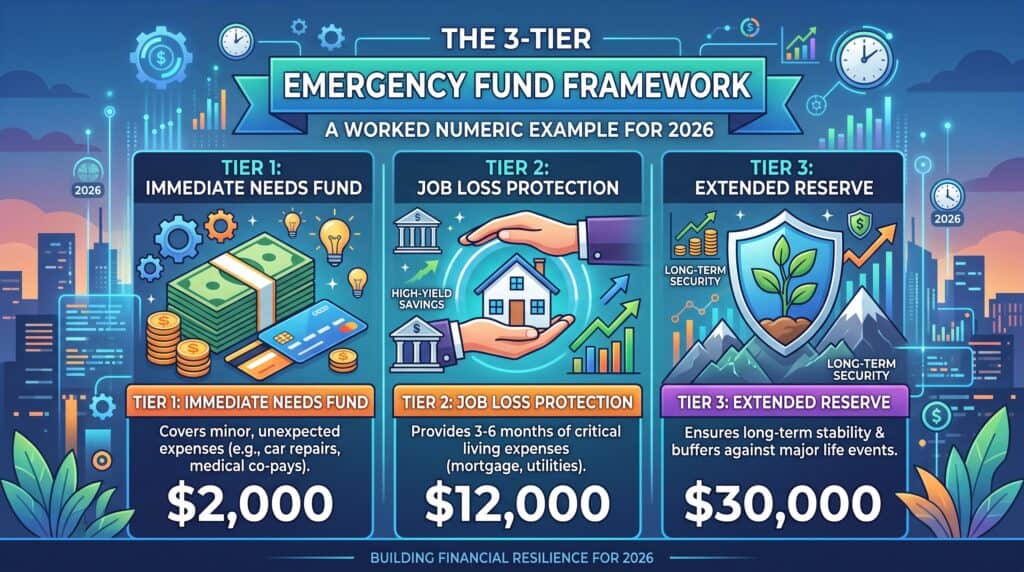
Having cash set aside for emergencies keeps you from going into debt when life throws you a curveball. A solid emergency fund can shield you from unexpected bills, job loss, or surprise repairs.
Start With a Quick Win Goal of $1,000
Your first target is $1,000 in savings. That’s usually enough for common emergencies—think car repairs, medical copays, or a busted appliance.
You don’t have to save it all at once. Break it into monthly goals that fit your budget.
Monthly savings breakdown:
| Monthly Amount | Time to Reach $1,000 |
|---|---|
| $250 | 4 months |
| $100 | 10 months |
| $50 | 20 months |
Keep your emergency fund in a separate savings account, not your main checking. That way, you’re less likely to dip into it for everyday stuff.
- Sell things you don’t use anymore online
- Pick up extra work or freelance gigs
- Send your tax refund straight to savings
- Cancel a subscription and move that money to your emergency fund
Once you hit $1,000, you’ve got a real safety net. But honestly, that’s just the start.
Work Toward 3-6 Months of Living Costs
Figure out your monthly essential expenses. Add up housing, utilities, food, insurance, minimum debt payments, and transportation.
Multiply that number by three for your minimum goal—or by six if you want maximum peace of mind.
Your target depends on your job situation. If you’ve got stable employment and good benefits, three months is usually enough. If you’re self-employed, work on commission, or your income’s unpredictable, aim for six months.
Job stability factors:
- Stable employment: 3 months of expenses
- Freelance or contract work: 6 months of expenses
- Commission-based income: 6 months of expenses
- Single-income household: 6 months of expenses
Set up automatic transfers from checking to savings each payday. Start small—even $25 or $50 helps.
Bump up your contributions when you get a raise or finish paying off a bill. Keep your emergency fund in a high-yield savings account that earns interest, but don’t invest it in stocks or retirement funds.
Your emergency fund should stay liquid and easy to access, available within a day or two if you really need it.
Build Your Investment Portfolio in 2026

Keeping money in a savings account gives you a safety net for emergencies. But let’s be honest, it won’t actually build wealth for you.
If you want your money to grow, you’ll need to put it to work in the market.
Getting started with investing opens up two powerful wealth-building tools. These strategies can work whether you’re just starting out or already on your way.
Set Up Your Investment Account
You need a place to keep your investments. The main choices: a regular taxable account or a Roth IRA.
Roth IRA Benefits
A Roth IRA comes with some great tax perks. In 2026, you can contribute up to $7,000 if you’re under 50, or $8,000 if you’re 50 or older.
Your money grows tax-free. When you withdraw during retirement, you won’t owe taxes on those gains.
There are income limits, though. Singles need to earn less than $150,000. Married couples filing jointly have to stay under $236,000.
Taxable Brokerage Account Benefits
A standard brokerage account lets you deposit as much as you want. You can also take money out whenever you need it.
The catch? You’ll pay capital gains taxes when you sell investments at a profit.
Getting Started
Major platforms like Fidelity, Vanguard, and Schwab make it easy to open an account—no opening fees. M1 Finance is a solid newer option too.
Opening an account usually takes about 15 minutes. You’ll need your Social Security number and bank info handy.
Which One to Choose
If you qualify, start with a Roth IRA. Max it out if you can.
Once you’ve done that, open a taxable account for any extra money you want to invest.
Buy Index Funds on a Regular Schedule
Index funds let you own small pieces of hundreds or thousands of companies at once. This way, your risk spreads across the whole market instead of depending on just a few stocks.
Popular Index Fund Options
| Fund Type | What It Tracks | Long-Term Returns |
|---|---|---|
| S&P 500 Index | 500 largest U.S. companies | About 10% annually |
| Total Market Index | All U.S. companies (large, mid, and small) | Similar to S&P 500 |
Keep Costs Low
Look for funds with expense ratios under 0.20%. Many top index funds only charge 0.03% to 0.05%.
Lower fees mean you keep more of your money, and it compounds faster.
Automate Your Investing
Set up automatic monthly transfers. Even $100 a month really does add up over time.
If you invest $200 every month and average 9% returns, you could see about $120,000 after 20 years. Not bad, right?
Don’t Try to Time the Market
Just buy shares every month, whether prices are up or down. That’s dollar-cost averaging.
When prices drop, your money buys more shares. When prices are higher, you get fewer. Over time, this averages out your cost.
Waiting for the perfect moment to invest? Honestly, the best time was yesterday. The next best is right now. Don’t overthink it—just start.
Tackle High-Interest Debt Aggressively

Credit card debt with 20-30% APR can wreck your wealth-building faster than almost anything else. Make this a top priority in 2026 so you can free up cash for saving and investing.
Build Your Debt Payoff Strategy
Write down every debt you owe. List the balance, interest rate, and minimum monthly payment for each one.
Three methods work well:
- Avalanche method: Make minimum payments on all debts, then throw extra money at the highest interest rate. This saves you the most over time.
- Snowball method: Pay off your smallest balance first for quick wins and motivation.
- Meltdown approach: Mix minimum payments, half-minimums, and interest-only payments each month to speed things up.
Pick the strategy that fits your personality. Avalanche saves the most on interest, but snowball keeps you motivated with fast progress.
Figure out how much extra you can pay each month beyond the minimums. Even an extra $75 or $100 a month makes a difference.
Set up automatic payments through your bank so you never miss a due date. Late payments hurt your credit and add fees—nobody wants that.
Explore Lower-Rate Options
Your credit score affects your refinancing options. If your score is above 670, you can get personal loans with rates between 8-15%—way better than most credit cards.
Balance transfer cards with 0% intro APR give you 12-21 months to pay down debt interest-free. Watch out for transfer fees (usually 3-5%), and make sure you can pay off the balance before the promo ends.
Debt consolidation combines payments into one monthly bill at a lower rate. This makes things simpler and can save you a lot in interest.
Always compare offers from at least three lenders before committing. Rates and terms can vary wildly, and shopping around might save you hundreds—or even thousands—over time.
Prepare for Significant Future Costs

Identify Major Purchases and Life Events
Take time to map out every big expense coming up in the next year or two. Think about annual insurance, property taxes, vehicle registration, holiday spending, and planned vacations.
Make a written list of these expenses and estimate the cost for each. Don’t forget things like:
- Home repairs you’ve put off
- Medical or dental work
- Car maintenance or replacement
- Weddings or family events
- Professional equipment you need
- Annual memberships or subscriptions
Once you know your total, divide by the months you have left before the bill is due. If you need $3,000 in ten months, start saving $300 a month right now.
Old appliances and electronics won’t last forever. If your fridge or laptop is pushing ten years, it’s probably time to start budgeting for a replacement before it dies at the worst moment.
Try setting aside $75 to $150 a month for unexpected home repairs. It’s way better than scrambling for $1,500 when your water heater fails on a weekend.
Create Targeted Savings Plans
Open separate savings accounts for each big goal—don’t mix these with your emergency fund. Keeping things separate helps you avoid spending money meant for something specific.
Assign a clear dollar amount and deadline for each goal. Your accounts might look something like this:
| Goal | Target Amount | Deadline | Monthly Savings |
|---|---|---|---|
| Beach Vacation | $2,500 | June 2027 | $208 |
| Laptop Replacement | $1,200 | March 2027 | $133 |
| Holiday Gifts | $800 | December 2026 | $133 |
Having specific targets makes it easier to stay motivated. It’s a lot more satisfying to track progress toward “$2,500 by June” than just tossing money into a generic savings account.
Set up automatic transfers from your checking to each savings account on payday. The money moves before you even notice it’s gone.
Even small amounts add up. Saving $25 every paycheck becomes $650 a year if you’re paid biweekly. Start with what fits your budget right now, and increase your savings when you get a raise or pay off debt.
Fine-Tune Your Tax Approach for 2026
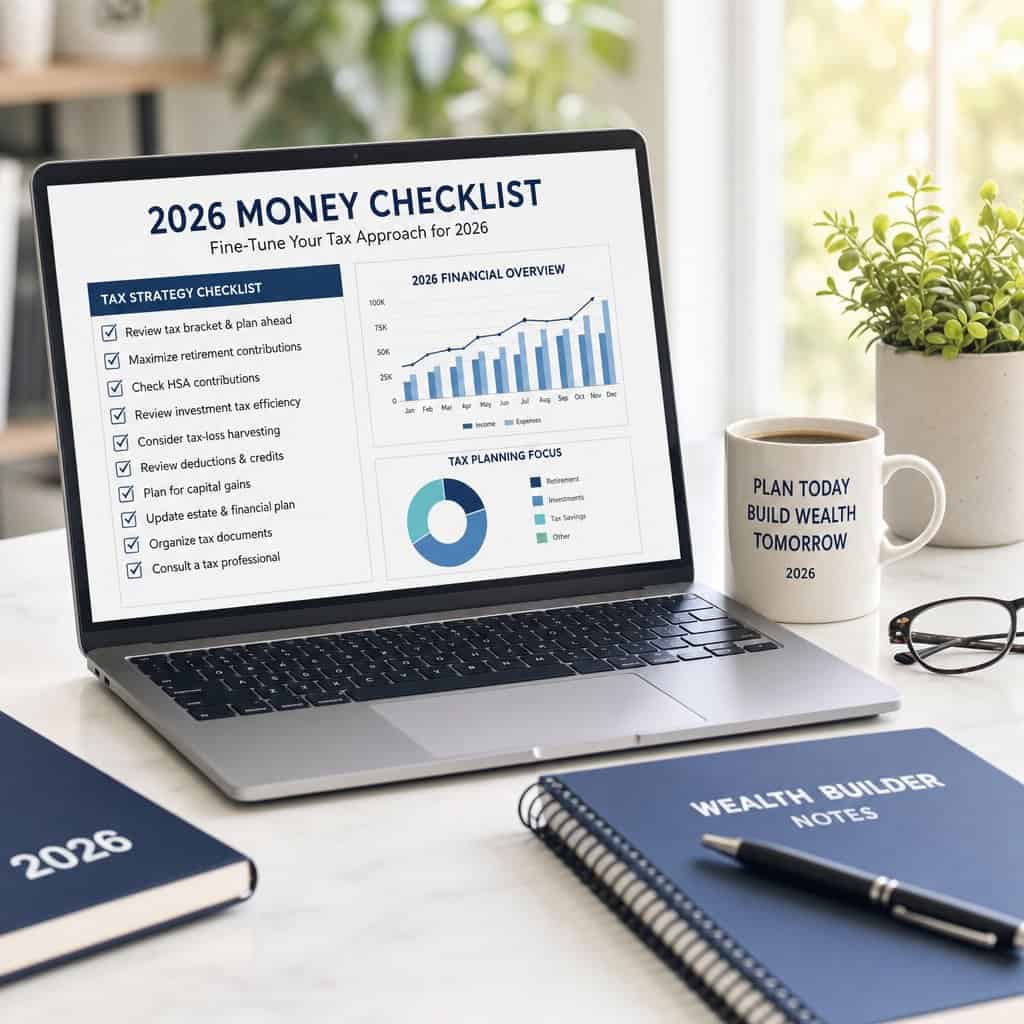
Dialing in your tax strategy means keeping more money in your pocket instead of sending it off to the IRS. A few tweaks to your withholdings and the accounts you use can mean real savings next tax season.
Adjust Your Withholding and Quarterly Payments
Take a look at your W-4 form if you work for an employer. If you run your own business, check your quarterly estimated payments.
Getting a big refund? That just means you loaned your money to the IRS all year—without interest. Owing a large amount at tax time can lead to penalties and extra charges.
Aim to break even or owe just a little when you file. That way, your money works harder for you all year long.
The IRS has an online withholding calculator to help you choose the right number of allowances. It takes around 15 minutes and can help you avoid surprises at tax time.
If you’re self-employed: Make quarterly estimated payments if you expect to owe $1,000 or more. Due dates fall on April 15, June 16, September 15, and January 15 of the next year.
Miss a deadline and you’ll rack up penalties and interest fast. It’s not a fun surprise, so mark those dates somewhere you won’t forget.
Use Accounts with Tax Benefits
Strategic tax planning in 2026 means using accounts that cut your tax bill now or let your money grow without taxes eating into it.
Traditional IRA or 401(k): When you contribute, you lower your taxable income for the year. For 2026, the IRA limit is $7,000 (or $8,000 if you’re 50+), and 401(k)s let you stash away $23,500, or $31,000 with catch-up contributions.
Roth IRA: You pay taxes now, but withdrawals in retirement are tax-free. This is smart if you think you’ll be in a higher tax bracket later on.
HSA (Health Savings Account): If you have a high-deductible health plan, this account gives you triple tax perks. Contributions reduce your taxable income, your money grows tax-free, and withdrawals for qualified medical expenses aren’t taxed. In 2026, you can put in $4,300 for yourself, or $8,550 for your family.
Honestly, it’s worth looking into tax-advantaged accounts as part of your wealth-building plan this year.
Protect Your Financial Future

Check and Update Who Gets Your Assets
It’s time to review the beneficiaries on your accounts. Check your retirement accounts, life insurance, and bank accounts—especially if it’s been a while.
Life changes quickly. Marriage, divorce, having kids, or losing someone close can make your old beneficiary forms out of date.
Your beneficiary choices override your will. If you divorced years ago but never updated your 401(k), your ex could still get the money, even if your will says otherwise.
Here’s what to do:
- Log into each financial account
- Review primary beneficiaries
- Add contingent beneficiaries as backups
- Make sure percentages total 100%
- Fix any outdated info
If you list minor kids as beneficiaries, name a custodian to manage those funds until they grow up. This usually takes less than an hour and could protect a lot of money from ending up in the wrong hands.
Create or Update Your Estate Documents
Everyone needs a will, no matter their net worth. Without one, state law decides who gets your stuff and who raises your children.
A solid estate plan includes three main documents: a will, healthcare power of attorney, and financial power of attorney. Attorneys typically charge $500 to $2,000, but some reputable online services cost less.
If you already have these documents, dig them out and read them. Laws change, your assets grow, and your wishes might shift.
| Document | Purpose | Update Trigger |
|---|---|---|
| Will | Asset distribution | Every 5 years or major life change |
| Healthcare POA | Medical decisions | Change in relationships |
| Financial POA | Money management | Change in trustees |
If your documents are over five years old, they probably need updates. Pick guardians for minor kids, select trustworthy executors, and choose healthcare proxies who really get your wishes.
Store originals in a fireproof safe and let someone you trust know where they are. Planning ahead like this saves your family a lot of stress later.
Increase Your Income Capacity

Your paycheck forms the base of your wealth-building plan. When you earn more, you can save and invest faster. Taking steps to boost your income in 2026 gives you more options for your future.
Ask for Higher Pay or Advancement
Show your boss proof of your value if you’re asking for a raise. Start tracking your achievements now, not later.
Keep a record of:
- Projects you’ve finished
- Money you saved the company
- Problems you solved
- New processes you introduced
Set up a meeting with your manager to talk pay. Don’t wait for your annual review—bring it up when you’ve got a strong case.
Do your homework. Check salary data for your role and area on Glassdoor, Salary.com, or Payscale. Walk in with a specific number, backed by research and your results.
If your company says no, at least you have clarity. Maybe it’s time to look elsewhere.
Those who get promoted tend to make themselves visible. Volunteer for projects that leaders notice. Talk about your work in meetings. Build relationships across departments so decision-makers know your impact.
Build Your Skills Regularly
Your skills influence your earning power. Check job listings a level or two above yours—see which skills pop up again and again.
You don’t need to spend a fortune to learn. YouTube is packed with free tutorials. Sites like Udemy, Coursera, and edX offer low-cost courses, and your library might even give you free LinkedIn Learning access.
Skills that often boost pay:
- Data analysis
- Project management
- Digital marketing
- Programming and coding
Industry certifications can sometimes bump your salary right away. If you spend just 30 minutes a day on new financial habits or skills, that’s 182 hours a year.
Stick with it. Small, steady effort really does add up over time.
Strengthen Your Money Skills

Learning about money isn’t a one-and-done thing. Your financial success builds as you pick up knowledge from trusted sources and real experts over time.
Follow Reliable Money Education Sources
Pick three to five solid finance resources and stick with them. Look for newsletters, podcasts, or videos that explain things in plain language—not get-rich-quick schemes.
The best sources come from certified planners, established news outlets, or platforms focused on education. Just 15 or 20 minutes a week adds up to real progress.
Good finance resources usually:
- Have authors with credentials like CFP or CPA
- Explain the “why” behind money moves
- Disclose business relationships
- Give realistic, not hype-driven, advice
- Don’t pressure you to buy stuff right away
Unsubscribe from anything that pushes expensive programs or investments nonstop. Trust your gut if something feels off.
Join Educational Events and Sessions
Free financial education events pop up at libraries, community centers, and workplaces all the time. Topics range from retirement accounts and property buying to tax tips and debt strategies.
Live events let you ask questions about your unique situation. You get direct answers, not just generic info.
Where to find good money events:
| Location | What to Check |
|---|---|
| Local library | Monthly event calendar |
| Community centers | Workshop schedules |
| Your employer | HR benefits portal |
| Credit unions | Public seminar listings |
| Online platforms | Eventbrite or similar sites |
Jot down two or three questions before any session. That way, you’ll leave with answers that actually help you.
Many employers include financial wellness programs in their benefits. See what’s available to you for free.
Put Your Finances on Autopilot

Managing money every month can eat up time and energy. Automating payments and moving records online saves hours and helps you avoid expensive mistakes.
Schedule Recurring Payments Automatically
Connect your bank account or card to recurring bills. Most mortgages, utilities, phone plans, insurance, and streaming services let you set up autopay online.
Automatic payments protect your credit score by eliminating missed due dates. Late payments can stay on your credit report for seven years and drop your score by 100 points or more.
You also skip late fees, which can run $25 to $40 each time. Check your account balance a few days before bills hit so you can transfer money if needed and avoid overdrafts.
Keep track of every autopay in one spot. A spreadsheet works, or just use your bank’s dashboard. Review this list every month to spot errors, price hikes, or subscriptions you don’t need anymore.
Bills worth automating:
- Mortgage or rent
- Electric, gas, and water
- Internet and phone
- Car payment and insurance
- Health insurance premiums
- Loan minimums
Move to Digital Financial Files
Ask your bank, credit card companies, and investment accounts for electronic statements. You’ll get an email when new documents are ready.
Create a folder system on your computer or cloud drive. Sort by type and year—taxes, insurance, medical bills, pay stubs.
Name each file clearly, like “2026_W2_Form” or “Auto_Insurance_Policy_2026.” This makes searching way less painful later.
A password manager saves your login details securely, so you don’t have to remember dozens of passwords. Look for one with strong encryption and two-factor authentication.
Snap photos of receipts for big purchases, home projects, or business expenses right away. Store digital copies in labeled folders and clear out the paper clutter.
Check your digital files every few months and delete anything you no longer need. Keeping things tidy helps when tax season or insurance claims pop up—or when you’re doing a financial planning checkup.
Review and Refresh Your Financial Targets

Monitor Your Annual Achievements
Pull up the financial targets you set at the start of 2025. Compare what you hoped to do with what actually happened.
Check the numbers. How much did you save? Which debts did you pay off? Did you increase your 401(k) contributions?
Jot down your real results:
- Total saved
- Debt paid off
- Income bumps
- Investment contributions
- Emergency fund growth
Calculate your completion rate for each goal. If you aimed for $6,000 in savings but ended at $4,200, that’s 70%. These percentages don’t lie—they show you where to focus next.
When you hit a goal, figure out what worked. Maybe automatic transfers made saving almost invisible. Maybe a side gig brought in more than you thought.
If you missed a target, ask yourself what got in the way. Life throws curveballs—medical bills, job changes, you name it. Don’t beat yourself up. Just spot the obstacles so you can plan around them next time.
For debt reduction, check every balance you’ve knocked down. If progress stalled, try switching strategies. The avalanche method hits high-interest debt first. The snowball method wipes out small balances to build momentum quickly.
Modify Targets Based on Current Circumstances
Your money goals need to fit your life as it is right now. Got a raise? Maybe it’s time to bump up retirement savings by a percent or two. New baby? Your emergency fund needs a boost, fast.
Set specific dollar amounts and deadlines for 2026. “Build savings” is vague. “Save $7,500 by December 31, 2026” is a clear goal. Break big goals into monthly chunks so you know if you’re on track.
Common life changes that call for new targets:
| Life Change | Target Adjustment Needed |
|---|---|
| Income increase | Raise retirement contributions and savings rates |
| Career change | Reassess monthly budget and income stability |
| Relocation | Plan for moving costs and housing expenses |
| Marriage | Combine finances and set shared targets |
| Divorce | Separate finances and rebuild individual plans |
| New child | Add childcare costs and education savings |
| Health issues | Expand emergency fund for medical expenses |
Write your updated targets somewhere you’ll see them. Maybe your phone lock screen, your favorite budget app, or even taped to your bathroom mirror.
When you set meaningful goals for the year, you give yourself a real shot at making progress—not just wishing for it.
Recognize Your Progress and Push Forward

Track and Honor Your Financial Wins
Write down every win as it happens. Whether you use a notebook, spreadsheet, or budgeting app, record moments like paying off a credit card, hitting a savings goal, or raising your credit score by 50 points. These aren’t just numbers—they mark real progress in your financial journey.
Check your wins every month. Take a few minutes on the first to see how things look compared to three months ago. Look at key numbers:
- Total debt balance
- Emergency fund growth
- Retirement contributions
- Net worth changes
- Credit score jumps
Give yourself small, budget-friendly rewards for big milestones. Maybe a nice dinner at your favorite spot or a quick day trip. Celebrate without blowing your budget.
Share your progress with people who get it. Chat with a friend working toward similar goals, join an online finance community, or check in with an accountability partner. A little recognition goes a long way—and you might inspire someone else, too.
Don’t downplay your achievements. Every paid-off debt, every dollar saved, every smart move adds up and pushes you closer to bigger goals.
Create Ambitious Yet Achievable Targets
Pick one financial goal that challenges you but isn’t out of reach in the next 6 to 12 months. Maybe you’ll increase retirement contributions by 2%, stash an extra $2,000 in savings, or hit a 720 credit score. Write the goal down and set a real deadline.
Break big goals into monthly steps. Want to save $3,000 this year? That’s about $250 each month. Try these ideas:
| Strategy | Monthly Impact |
|---|---|
| Cancel unused subscriptions | $20-50 |
| Meal prep twice weekly | $80-120 |
| Take quarterly freelance projects | $150-200 |
Your financial goals should change as your life does. Get a raise? Boost your investment contributions. Pay off a loan? Redirect that money to savings or investments. Don’t let your plan get stuck on autopilot—keep it moving with you.
Common Financial Questions Answered
What’s the best way to build a budget that actually works?
Track every dollar you earn and spend for a month. Log everything—paychecks, side gigs, rent, groceries, takeout, subscriptions, the works.
Pick a budgeting style that fits how you think. The 50/30/20 rule splits your income: 50% for needs, 30% for wants, and 20% for savings and debt payments. Not into spreadsheets? Plenty of digital tools will do the math for you.
Look over your budget every month and adjust as life changes. Flexibility matters—life rarely stays the same for long.
Why should I contribute to my 401(k) and take advantage of employer matching?
Workplace retirement accounts lower your current taxes and help you build long-term wealth. Your money grows tax-deferred until you withdraw it in retirement.
Employer matches supercharge your savings. If your company matches 50% up to 6% of your salary:
- Annual salary: $50,000
- Your 6% contribution: $3,000
- Employer adds: $1,500
- Total retirement savings: $4,500
Always grab the full match before putting money elsewhere. Skipping it means leaving free money on the table.
What makes high-yield savings accounts worth considering?
Most big banks pay just 0.01% to 0.05% interest. High-yield savings accounts offer 4% to 5%—that’s a big difference.
Here’s the math on $10,000:
- Traditional savings: $5 a year
- High-yield savings: $400–$500 a year
That’s real money you can use for other goals.
Your deposits stay protected by FDIC insurance up to $250,000 per account. The main difference? You’ll probably do your banking online instead of at a branch.
Where can I access my credit report without paying fees?
Go to AnnualCreditReport.com for free reports from Equifax, Experian, and TransUnion. It’s the only official, government-backed site for truly free annual reports. You get one from each bureau every 12 months.
Reviewing your credit history helps you spot mistakes that can unfairly hurt your score. About 20% of people find errors, like:
- Accounts that aren’t yours
- Wrong payment records
- Old negative marks
- Incorrect credit limits
Regular checks also help you catch identity theft fast. If you see accounts or inquiries you don’t recognize, you can dispute them right away and limit the damage.
How do I reduce insurance costs while maintaining adequate protection?
Ask for quotes from multiple insurers once or twice a year. Prices change, and your old policy might not be the best deal anymore.
Raise your deductibles if you have enough in savings. Bumping your deductible from $500 to $1,000 can cut premiums by 15% to 30% without reducing your actual coverage.
Bundle your policies—like home and auto—with one provider to get discounts. Most companies knock off 15% to 25% for bundling. Also, ask about other ways to save:
- Safe driver discounts
- Paying annually instead of monthly
- Car safety features
- Home security systems
- Professional or alumni group discounts
What approach works best for building emergency savings?
Start with a realistic goal—aim for $1,000 as your first savings milestone. That amount usually covers most surprise expenses, like a car repair or a sudden medical bill.
Once you hit that mark, set your sights on saving enough to cover three to six months of basic living expenses. Breaking it up into smaller chunks makes the whole thing less intimidating, honestly.
Figure out your monthly essentials by adding up:
- Housing costs
- Utility bills
- Food expenses
- Insurance premiums
- Minimum debt payments
Multiply your total by three for a solid safety net, or by six if you want extra peace of mind.
Set up automatic transfers from your checking to your savings right after payday. Treating savings like a bill you can’t skip helps you stick with it.
Even $50 or $100 every pay period adds up faster than you might think. Watching your balance grow feels rewarding and makes it easier to keep going.
Keep your emergency fund in a high-yield account, away from your regular spending money. That way, you can grab it in a real emergency but won’t be tempted to dip in for something minor.
If you are ready to take the next step in your financial journey, explore our other articles in the series or create visual trackers for your savings goals.
Series Part 4: The Silent Wealth Killer: Defeating Lifestyle Creep in 2026
SERIES PART 5. MASTER MINDSET SHIFTS FOR FINANCIAL SUCCESS, DEFEAT LIFESTYLE CREEP, APPLY THE 50% RAISE RULE, AND AUDIT DIGITAL LEAKS WITH THE 2026 WEAL
Disclaimer: Millennial Credit Advisers is not a licensed credit service provider or financial advisor. We don’t offer credit repair, debt management, or legal services. Educate yourself on saving, reducing debt, and managing credit for economic improvement. Understand credit reports, scores, and financial products. Consult a financial advisor for personalized advice. Track your progress for a better credit journey.
Written content – “Please view our full AI Use Disclosure.
“We improve our products and advertising by using Microsoft Clarity to see how you use our website. By using our site, you agree that we and Microsoft can collect and use this data. Our privacy policy has more details.”