
Save Money Fund Your Future: A Complete Guide to High-Yield Savings Accounts and Investment Strategies for Building Wealth in 2026.
THIS ARTICLE MAY CONTAIN AFFILIATE LINKS, MEANING I GET A COMMISSION IF YOU DECIDE TO MAKE A PURCHASE THROUGH MY LINKS AT NO COST TO YOU. PLEASE READ MY AFFILIATE DISCLOSURE FOR MORE INFO.
DON’T HAVE TIME TO READ THE FULL ARTICLE. HERE’S WHAT YOU ARE MISSING.
- Save Money Fund Your Future: A Complete Guide to High-Yield Savings Accounts and Investment Strategies for Building Wealth in 2026.
- Strategies for Accelerating Savings Growth
- Automating Contributions for Consistent Progress
- Setting Practical and Achievable Financial Goals
- Let’s make saving money easy:
- Tracking Performance and Adjusting Strategies
- The Role of Digital Finance and Robo-Advisors
- Comparing Traditional and Digital Management Options
- Maximizing Returns in the 2026 Economic Landscape
- Balancing Risk and Growth in a Changing Market
- Transformations in Personal Finance: 2023 to 2026
- Evolving Consumer Habits and Preferences
- Actionable Steps for Long-Term Financial Success
- Leveraging Expert Resources and Guidance
Building wealth isn’t about having a massive salary or some mind-bending investment scheme. In this complete guide we’re revealing many secrets starting with our number one favorite… savings.
The best way to grow your money is to pay yourself first by automatically saving.
Save Money, Fund Your Future explores underused wealth-building strategies through high-yield savings accounts that capitalize on current interest rates.
As of June 2026, U.S. interest rates are expected to remain steady for now. A high-yield savings account offers a smart, flexible way to grow your money and stay prepared as market conditions change.
This approach really paid off in 2023 when rates were as high as 5.00% to 5.25%, and it’s still a solid move in 2026 and beyond.

You’re facing different financial challenges now than savers did a few years ago. Interest rates have shifted, new savings tools keep popping up, and the economic landscape just looks different.
When you know how to adapt your savings strategy to what’s happening right now, every dollar you set aside can work a little harder for you.
This guide breaks down proven ways to build your savings automatically, set goals that actually stick, and pick accounts that make sense for your money. You’ll see how the economic changes from 2023 to 2026 play into your savings options and what you can do right now to protect your financial future.
Strategies for Accelerating Savings Growth

Any financial advisor would advise that building wealth isn’t just about setting cash aside and hoping for the best. It’s about having a plan with a set foundation for long term success.
Saving for your future can start with exploring a few often underrated savings vehicles and using effective strategies to reach your savings goals. The right mix of high-yield accounts, automation, and good timing can significantly boost your savings.
Leveraging High-Yield Savings Accounts
High-yield savings accounts give you much better returns than old-school savings accounts. Usually, these accounts offer interest rates 10 to 15 times higher than what you’ll find at most traditional banks.
You keep access to your money, so these accounts work well for emergency funds or short-term goals. Most high-yield savings accounts skip the monthly fees and don’t require a big minimum balance.
Online banks and credit unions tend to offer the best rates thanks to their lower costs. It’s always smart to shop around and compare rates before opening an account.
Key features to look for:
- FDIC or NCUA insurance coverage
- No monthly maintenance fees
- Easy online access and transfers
- Competitive APY that adjusts with market rates
Utilizing Certificates of Deposit for Guaranteed Returns
Certificates of deposit (CDs) lock in your interest rate for a set term, anywhere from three months to five years. Your money grows at a predictable rate, and you don’t have to worry about the market’s ups and downs.
The catch? You can’t touch your funds during the term without paying a penalty, so don’t use CDs for money you might need in a pinch.
With a CD ladder, you open several CDs with different maturity dates. That way, you get regular access to some of your money while still earning higher rates on longer-term deposits.
CD ladder example:
| Amount | Term | Rate | Maturity |
| $1,000 | 1 year | 4.5% | Year 1 |
| $1,000 | 2 years | 4.7% | Year 2 |
| $1,000 | 3 years | 4.9% | Year 3 |
Optimizing High-Interest-Rate Share Certificates
Share certificates work a lot like CDs, but you get them at credit unions instead of banks. Sometimes, they offer even better rates.
Credit unions are owned by their members, so they can pass along savings through higher rates. You’ll need to become a member, but most credit unions make that pretty easy.
Share certificates come with NCUA insurance up to $250,000, just like FDIC coverage at banks. That’s solid peace of mind.
Watch for special promotional rates—credit unions roll them out from time to time, and they can really bump up your returns.
Automating Contributions for Consistent Progress

Automatic transfers take the guesswork out of saving. You set up recurring deposits from your checking account to your savings accounts, timed with your paydays.
The “pay yourself first” approach treats savings like any other bill. The money moves before you even get a chance to spend it.
Start with an amount you know you can comfortably manage, even if it isn’t large. Of course, income levels vary, but setting aside a steady $1,000 each month adds up to $12,000 a year before interest. That’s a solid result for something that takes very little effort to maintain.
Use four quick automation setup steps to start saving 12,000 today.
If you want save more read this advance article. HOW TO SAVE 50 000 IN A YEAR: A STRATEGIC GUIDE TO BOOSTING YOUR SAVINGS.
Automation setup steps:
- Pick your savings target per pay period
- Choose a transfer date right after payday
- Set up the recurring transfer in your bank’s online system
- Check and tweak the amount every few months if your income changes
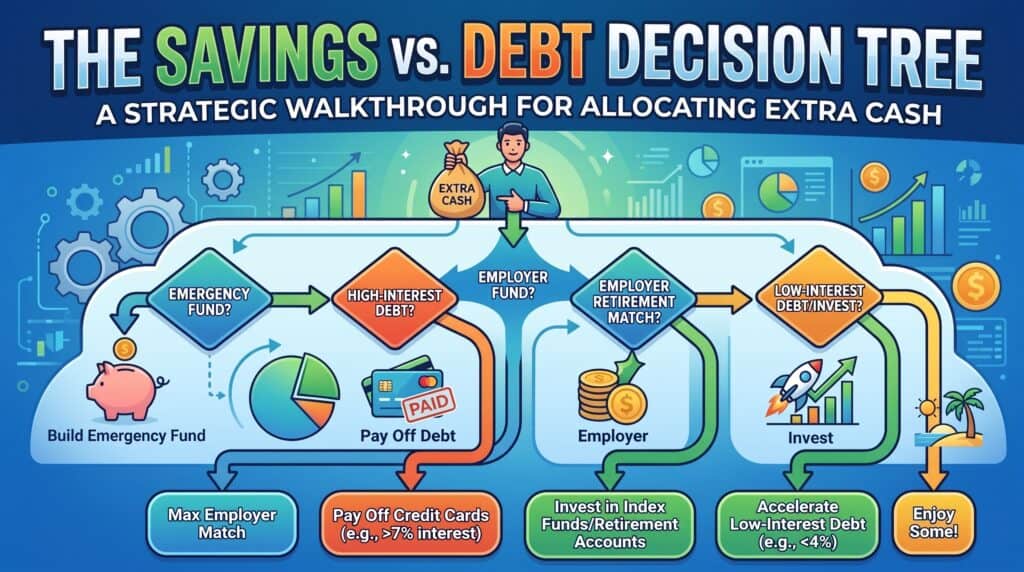
You can even automate deposits to multiple accounts at once. That way, you’re funding your emergency savings, retirement, and investments all at the same time—no extra hassle.
Setting Practical and Achievable Financial Goals

A good savings plan starts with clear goals and deadlines that actually fit your life. You’ll need specific dollar targets and measurable milestones so you can track your progress.
Establishing a Realistic Savings Timeline
Your timeline should match your real income and expenses. Look at your monthly income after taxes, subtract all your fixed costs like rent, utilities, and any loan payments.
Whatever’s left is what you can save or spend. For example, if you bring in $3,000 a month and spend $2,400 on bills, that leaves $600 for savings and fun stuff.
Don’t set a timeline that’s too aggressive. Most folks find that a 12-month commitment feels motivating but not overwhelming. If you hit a rough patch or unexpected costs pop up, you can always stretch it to 18 or 24 months.
Pick a start date that lines up with your paycheck, usually the first of the month. That way, you can set up those automatic transfers before anything else tempts you.
Defining Specific, Measurable Targets
“Save more money” is too vague to work. Set a real number and a real deadline.
Let’s make saving money easy:
If you want $1,200 saved in a year, that’s $100 a month. You can split that up—maybe $50 goes into a high-yield savings account, and $50 into a share certificate.
Example savings breakdown:
| Account Type | Monthly Amount | Annual Total | Purpose |
| High-yield savings | $60 | $720 | Emergency fund |
| Share certificate | $40 | $480 | Long-term growth |
Write down your target and put it somewhere you’ll see it. Lots of people use a budgeting app or spreadsheet to keep tabs on where they stand.
Tracking Performance and Adjusting Strategies
Check your balances at least once a month to make sure your automatic transfers went through. Compare your actual savings to your goal and see if you’re on track.
If you miss a month, you’ve got options: catch up next month, lower your monthly target, or give yourself a little more time.
If you get a raise, change jobs, or cut expenses, bump up your monthly savings. And when interest rates shift, double-check that your accounts are still giving you the best returns.
Keep a simple log with your starting balance, monthly deposits, interest earned, and current total. It’s motivating to see both your contributions and the interest stacking up.
The Role of Digital Finance and Robo-Advisors

Digital finance tools and robo-advisors are changing how you grow your savings. Automated investing makes it way easier to put your money into mutual funds, even if you’re not a finance pro or starting with a big pile of cash.
Advantages of Automated Investment Platforms
Robo-advisors use algorithms to manage investments based on your goals and risk comfort. You answer a few questions about your financial situation, and they build a portfolio for you.
Key benefits include:
- Low minimum deposits – Many let you start with $100 or less.
- Lower fees – You’ll usually pay 0.25% to 0.50% a year instead of the 1% or more that human advisors charge.
- Automatic rebalancing – The platform keeps your portfolio on track without you lifting a finger.
- Tax-loss harvesting – Some will sell off losing investments to help lower your tax bill.
We use a handful of platforms, and you probably do too.
These platforms keep an eye on your accounts every day and tweak things as needed. You don’t have to worry about market timing or what to buy and sell. The tech takes care of the heavy lifting, so you can just focus on adding money each month.
Integrating Mutual Funds Into Your Savings Plan
When you set up automatic monthly transfers to a robo-advisor account, you’re investing in mutual funds on a regular schedule. This approach is called dollar-cost averaging.
You end up buying more shares when prices are low and fewer when they’re high. Your $100 monthly contribution adds up over time.
The robo-advisor spreads your money across different mutual funds, usually a mix of stocks and bonds. This diversification helps lower your risk compared to putting everything in one place.
Most platforms let you tweak your monthly amount if your budget shifts. You can bump up contributions when you’ve got extra cash or pause payments if something unexpected comes up, though sticking to a routine gets you to your goals faster.
Comparing Traditional and Digital Management Options
Traditional financial advisors meet with you in person or over the phone to talk through your finances. Digital robo-advisors work through apps and websites, so there aren’t any face-to-face meetings.
| Feature | Traditional Advisor | Robo-Advisor |
| Minimum investment | $25,000 to $100,000 | $0 to $500 |
| Annual fees | 1% to 2% of assets | 0.25% to 0.50% |
| Personal meetings | Yes | Limited or none |
| Investment options | Customized | Pre-set portfolios |
| Access to accounts | Business hours | 24/7 online |
Pick what fits your needs and how comfortable you are with technology. Robo-advisors are great if you want simple, low-cost investing for goals like retirement or just growing your savings.
If you have a more complicated financial life, a big portfolio, or you just prefer personal guidance, a traditional advisor might make more sense.
Maximizing Returns in the 2026 Economic Landscape

U.S. interest rates have shifted from their 2023 highs, and that brings both new challenges and opportunities for savers. Figuring out where to put your money now takes some awareness of market conditions and a careful look at your options.
Adapting to Evolving Interest Rates
The Federal Reserve has changed rates several times since 2023, pulling them down from their peak. High-yield savings accounts that once offered 5% or more now usually sit between 3.5% and 4.2%—still a lot better than the pre-2022 rates under 1%.
Share certificates and CDs have followed a similar path. That 4.74% rate from a 2023 email? It’s moved. Now, you can find 12-month terms at 3.8% to 4.5% if you shop around.
Think about locking in rates when they fit your plans. Shorter-term certificates let you stay flexible as rates move, while longer-term options can lock in today’s rates if you think they’ll drop more.
Key rate ranges in June 2026:
- High-yield savings: 3.5% to 4.2%
- 12-month CDs: 3.8% to 4.5%
- 24-month CDs: 3.6% to 4.3%
Identifying Opportunities Amid Economic Shifts
The economy in 2026 feels a lot more stable than it did back in 2023. Inflation has cooled to around 2.5%, down from 4% a few years ago, so your savings actually grow after inflation for once.
Digital finance services and robo-advisors have added new features. Some now offer hybrid accounts that blend high-yield savings with automated investing, and minimum deposits have dropped—some platforms let you start with as little as $10.
Credit unions still offer some of the best share certificate rates, often beating banks by 0.2% to 0.5%. If you’re eligible for membership, take a look—you might get a better deal.
Money market accounts have become more appealing, too. They give you check-writing and debit access, with rates close to high-yield savings. It’s a nice balance between growth and liquidity.
Balancing Risk and Growth in a Changing Market
Your risk tolerance really shapes how you mix your accounts. FDIC and NCUA insurance still cover deposits up to $250,000 per account type at each institution, so that’s your safety net.
If you’re looking for balance, you might go with 60% in guaranteed accounts like CDs and high-yield savings, and 40% in market-based investments through robo-advisors. Adjust those numbers based on what feels right for you and your timeline.
Setting up recurring transfers—just like people did in 2023—still works. Automating your savings means the money moves before you get a chance to spend it elsewhere.
Try laddering your certificates. Split your savings across several CDs with different maturity dates so you get regular access to some of your money and a higher overall rate than if you kept everything liquid.
Track your returns every month. Figure out what you actually earn after taxes and inflation, so you know your real progress.
Transformations in Personal Finance: 2023 to 2026

The financial landscape has changed a lot in just three years. Interest rates have calmed down after the wild swings of 2023, and technology has totally changed how you manage your money.
Key Changes in Savings Products and Rates
Rates have dropped from their 2023 highs but are still better than what we saw for most of the last decade. High-yield savings accounts now pay between 3.2% and 4.1%, down from 4.5% to 5.3% in 2023.
Share certificates and CDs have adjusted too. That 4.74% rate from 2023 is now closer to 3.5% to 4.0% for similar terms. Even so, these rates still beat inflation and help you reach your savings goals.
Banks have started offering more flexible terms. You can find 3-month, 9-month, and 18-month options, not just the usual 6- or 12-month certificates. That makes it easier to match your savings products to your timeline.
Current Rate Comparison:
- High-yield savings: 3.2% – 4.1% APY
- 12-month CDs: 3.5% – 4.0% APY
- Money market accounts: 3.0% – 3.8% APY
The Rise of Financial Technology Solutions
Digital finance services have exploded since 2023. Robo-advisors now manage over $2.3 trillion in assets, up from $1.4 trillion just three years ago.
These platforms keep adding new tools. You can set up multiple savings goals, change risk levels instantly, and see all your accounts in one dashboard. Some even offer tax-loss harvesting for accounts as small as $500.
Mobile banking apps have gotten a lot more powerful. You can open new accounts, transfer money, and buy CDs without ever calling or visiting a branch. Voice-activated banking and AI-powered spending insights are now pretty standard on the big platforms.
Security has stepped up, too. Biometric authentication, multi-factor and real-time fraud detection keep your money safe and accessible around the clock.
Evolving Consumer Habits and Preferences
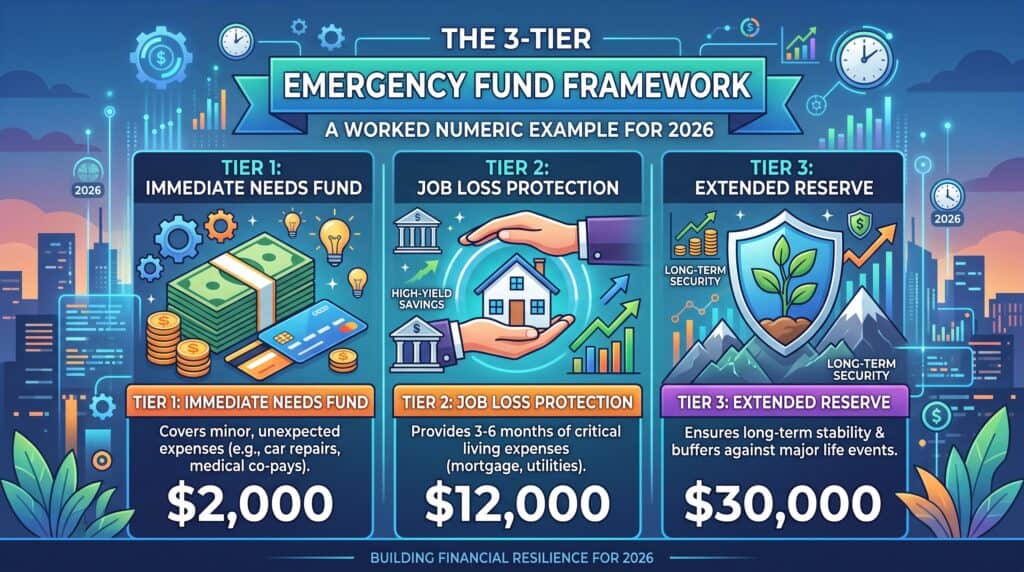
Americans have raised their emergency fund targets. Now, the recommendation is to save 6-9 months of expenses, up from the old 3-6 months, thanks to ongoing uncertainty.
Automatic savings tools are everywhere. Over 60% of savers now use automatic transfers, compared to 42% in 2023. That lines up with the $100 monthly transfer strategy mentioned earlier.
People split their savings between more account types than before. The average saver now uses 2.8 different savings vehicles, up from 1.9 in 2023. This usually means mixing high-yield accounts with investment products for better growth.
Younger savers love mobile-first institutions, while older folks still want traditional banks with digital features. Both groups chase good rates and low fees, not brand names.
Actionable Steps for Long-Term Financial Success

Building wealth takes steady effort and smart decisions. You need a plan that covers saving, tracking your progress, and knowing when to get help.
Implementing Proactive Saving Habits
Treat savings like any other bill—pay it every month, no excuses. Set up automatic transfers from checking to savings on payday so you don’t get tempted to spend first.
Start with whatever fits your budget. Even $25 or $2500 a month adds up. Increase it when you get a raise or pay off a debt.
Pick accounts that match your goals:
- Emergency fund – High-yield savings account (currently 4.0% to 5.0% APY)
- Short-term goals (1-5 years) – Certificates of deposit or share certificates
- Long-term growth (5+ years) – Mutual funds or retirement accounts
It’s worth reviewing your spending every month to spot extra cash. Cancel subscriptions you don’t use. Bring lunch instead of eating out. Move those savings into your accounts as soon as you find them.
Monitoring Progress Toward Your Goals
You really should check your accounts at least once a month. Glance at your balance, interest earned, and total deposits.
This quick review helps you figure out if you’re actually moving toward your savings target—or just treading water.
Create a simple spreadsheet or try a banking app to keep tabs on all your accounts in one spot. Jot down your goal amount and your target date.
Figure out how much you’ll need to save each month to actually get there. It’s basic math, but it makes a difference.
Key metrics to track:
| Metric | What to Measure | Frequency |
| Account balance | Total saved so far | Monthly |
| Interest earned | How much your money grew | Monthly |
| Contribution rate | Amount saved vs. planned | Monthly |
| Goal progress | Percentage toward target | Quarterly |
When life throws you a curveball, adjust your plan. Got a bonus or a tax refund? Toss it into your savings if you can.
If an emergency pops up and you need to dip into your emergency fund, don’t beat yourself up. That’s literally why you built it in the first place.
Leveraging Expert Resources and Guidance
You don’t have to figure out everything alone. Banks and credit unions offer free financial counseling to help you pick the right savings products.
Many also provide online calculators that show how your money might grow over time. It’s surprisingly handy to see those numbers in black and white.
Robo-advisors manage investment accounts for you at a low cost. These digital services use algorithms to build a portfolio based on your age, goals, and risk tolerance.
Fees usually range from 0.25% to 0.50% of your balance per year. For some folks, that’s a fair trade-off for convenience and peace of mind.
Think about meeting with a certified financial advisor once a year to review your strategy. Fee-only advisors, who charge by the hour, tend to keep their advice focused on your best interests.
You can also learn from reliable sources like government websites, established financial institutions, and certified financial planners. It’s probably best to skip advice from social media influencers—they might not have the right credentials or even your situation in mind.
If you are ready to take the next step in your financial journey, explore our other articles in the series or create visual trackers for your savings goals.
Series Part 4: The Silent Wealth Killer: Defeating Lifestyle Creep in 2026
SERIES PART 5. MASTER MINDSET SHIFTS FOR FINANCIAL SUCCESS, DEFEAT LIFESTYLE CREEP, APPLY THE 50% RAISE RULE, AND AUDIT DIGITAL LEAKS WITH THE 2026 WEAL
Disclaimer: Millennial Credit Advisers is not a licensed credit service provider or financial advisor. We don’t offer credit repair, debt management, or legal services. Educate yourself on saving, reducing debt, and managing credit for economic improvement. Understand credit reports, scores, and financial products. Consult a financial advisor for personalized advice. Track your progress for a better credit journey.
Written content – “Please view our full AI Use Disclosure.
“We improve our products and advertising by using Microsoft Clarity to see how you use our website. By using our site, you agree that we and Microsoft can collect and use this data. Our privacy policy has more details.”