The Savings vs. Debt Decision Tree: A Strategic Walkthrough for Allocating Extra Cash.
THIS ARTICLE MAY CONTAIN AFFILIATE LINKS, MEANING I GET A COMMISSION IF YOU DECIDE TO MAKE A PURCHASE THROUGH MY LINKS AT NO COST TO YOU. PLEASE READ MY AFFILIATE DISCLOSURE FOR MORE INFO.
When you have extra cash at the end of the month, the perennial question is:
Should I put it toward my high-interest credit card debt, or deposit it into a high-yield savings account (HYSA)?
The answer isn’t always straightforward, as it depends on a complex interplay between interest rates, your current credit utilization, and your psychological need for financial security.
This article provides a comprehensive, strategic walkthrough to help you navigate this decision.
four FREE Key Giveaways
- Interest Rate Arbitrage: If your credit card APR is higher than your savings account APY (which is almost always the case), paying down debt yields a mathematically higher return.
- The Psychological Factor: Building an emergency fund first, even if it means paying more interest temporarily, can prevent you from falling back into debt during an unexpected crisis.
- Credit Score Impact: Reducing credit card balances lowers your credit utilization ratio, which is a major factor in improving your credit score.
- The Hybrid Approach: You don’t have to choose just one path. A balanced approach often involves maintaining a starter emergency fund while aggressively tackling high-interest debt.
Understanding the Math: APY vs. APR
The core of the savings versus debt debate lies in the numbers. Let’s compare the Annual Percentage Yield (APY) of a savings account with the Annual Percentage Rate (APR) of a credit card.
Compare APY and APR.
Currently, the average credit card interest rate hovers around 24.66%, according to the Federal Reserve. In contrast, high-yield savings accounts might offer APYs ranging from 4% to 5%.
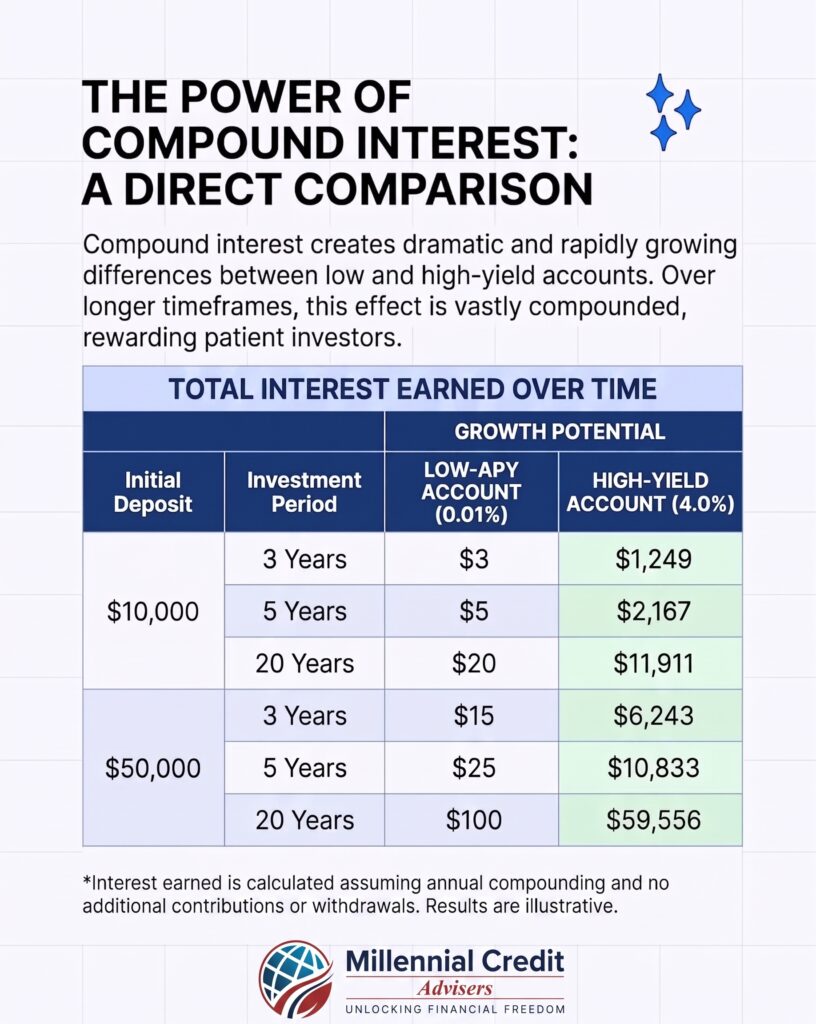
The Power of Compound Interest.
The Numeric Comparison Table
| Financial Goal | Average Rate | The Math on $1,000 | Result After 1 Year |
| Credit Card Debt | 24.66% APR | Carrying a $1,000 balance | You pay ~$246.60 in interest |
| High-Yield Savings | 4.50% APY | Saving a $1,000 balance | You earn ~$45.00 in interest |
If you have $1,000 in extra cash, putting it in savings earns you $45, but carrying $1,000 in credit card debt costs you $246.60. Mathematically, paying off the debt is the equivalent of a guaranteed, tax-free 24.66% return on your money.
The Strategic Decision Tree: Where Does Your Extra Cash Go?
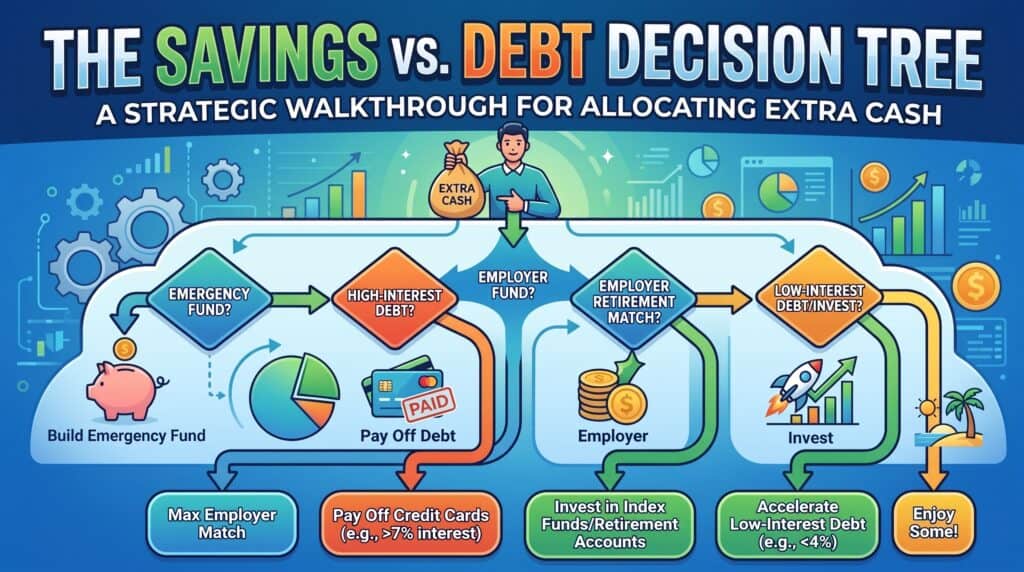
While the math heavily favors paying off debt, real life requires nuance. Follow this visual decision tree to determine your next move.
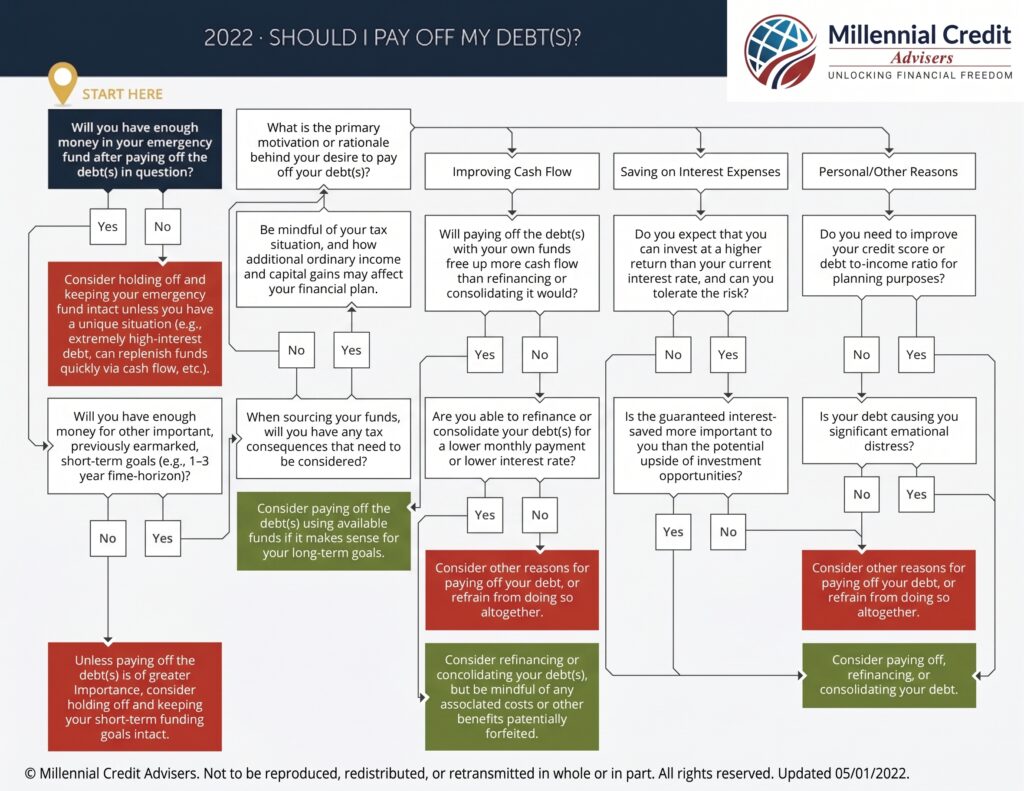
Debt vs. Savings Decision Tree.
Phase 1: The Starter Emergency Fund
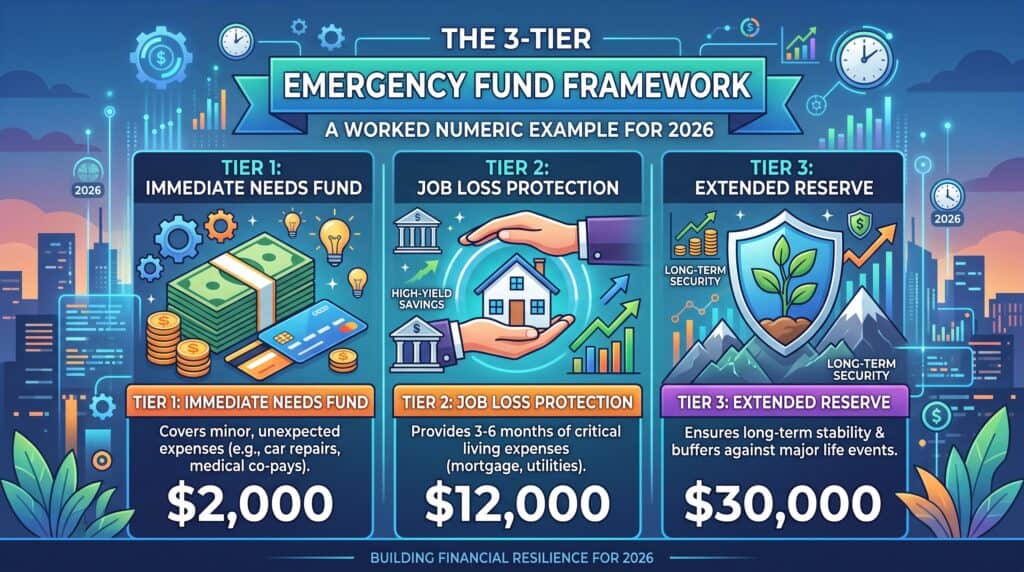
Do you have at least $1,000, $10,000, $20,000, or one month’s rent or mortgage saved in an easily accessible account?
- NO: Stop right here. Direct all extra cash toward building this starter fund. This prevents minor emergencies (like a blown tire) from turning into new, high-interest debt.
- YES: Move to Phase 2.
Phase 2: Employer Match Check
Does your employer offer a 401(k) match, and are you contributing enough to get it?
- NO: Increase your 401(k) contributions to the exact percentage your employer matches. This is essentially free money and often represents a 50% to 100% instant return on investment, which beats any credit card interest rate.
- YES: Move to Phase 3.
Phase 3: Tackle High-Interest Debt (The Avalanche Method)
Do you have credit card debt, payday loans, or personal loans with interest rates above 8-10%?
- YES: Aggressively attack this debt. You can use the avalanche or snowball method, but the math favors targeting the highest interest rate first.
- NO: Move to Phase 4.
Avalanche vs. Snowball. Community Resource Credit Union
Phase 4: Build the Fully Funded Emergency Fund
Once high-interest debt is cleared, it’s time to build a robust safety net.
- Goal: Save 3 to 6 months of living expenses in a high-yield savings account.
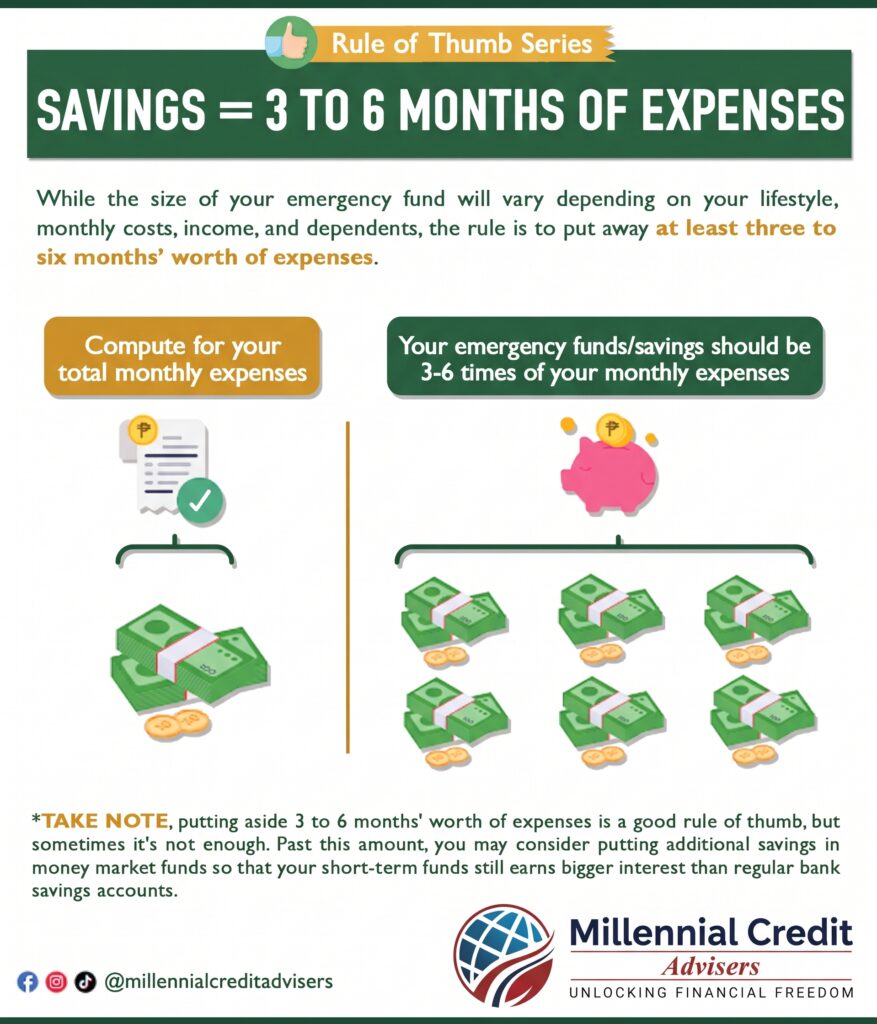
3- to 6-Month Emergency Fund.
Phase 5: Low-Interest Debt and Investing
If you have low-interest debt (like a mortgage or some student loans under 5%) and a fully funded emergency fund, you can begin splitting your extra cash between extra debt payments and long-term investing (like an IRA or brokerage account).
How This Decision Impacts Your Credit Score
Your decision to allocate cash toward debt or savings directly impacts your credit profile. The credit bureaus do not look at your savings account balances; they look at your debt obligations.
One of the most significant factors in your FICO score is your credit utilization ratio—the amount of credit you are using compared to your total available credit.
According to Experian, utilization accounts for 30% of your score.
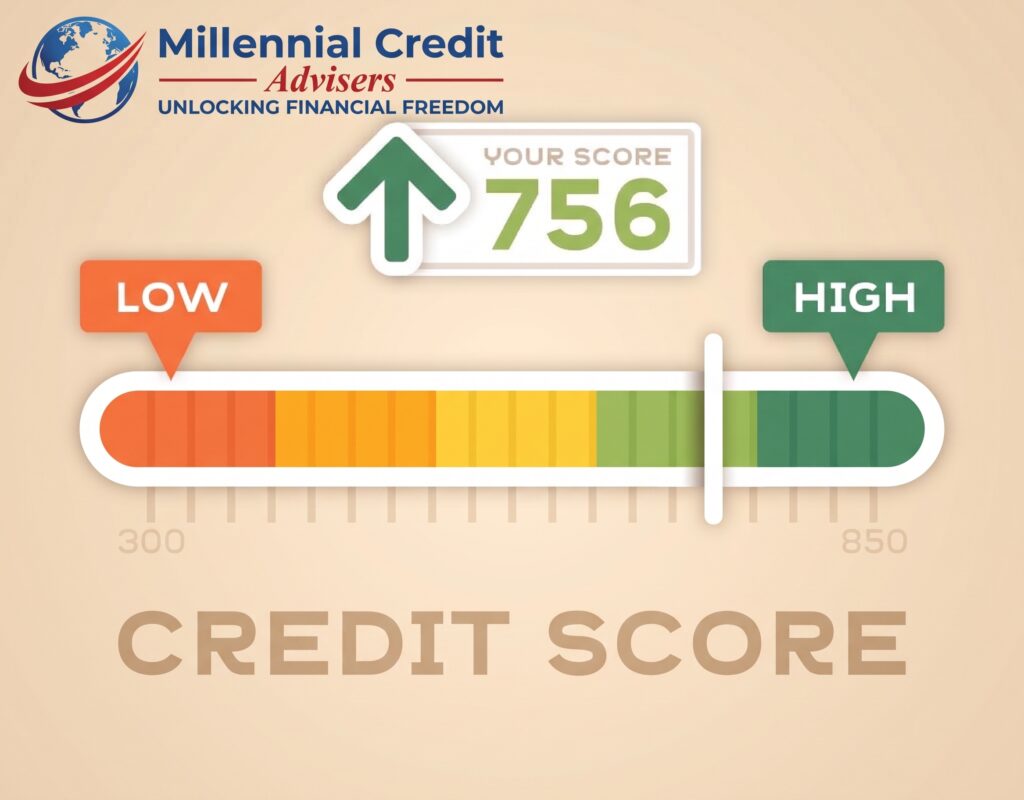
Credit Utilization Ratio.
By directing extra cash toward paying down a credit card balance, you immediately lower your utilization ratio. This often results in a rapid and noticeable boost to your credit score, which can be invaluable if you plan to apply for a mortgage, car loan, or even rent an apartment.
The Hybrid Approach Checklist
If the thought of completely draining your savings to pay off debt causes you anxiety, consider the hybrid approach.
Hybrid Approach: Automate Savings and Payments.
- Calculate Your “Extra”: Determine exactly how much disposable income you have after mandatory bills and minimum payments. Let’s say it’s $300.
- Define the Split: Decide on a ratio that feels comfortable. A common approach is 80/20.
- Allocate to Debt: Send $240 (80%) to your highest-interest credit card.
- Allocate to Savings: Send $60 (20%) to your high-yield savings account.
- Automate It: Set up automatic transfers so this happens without your active intervention every payday.
This method allows you to make meaningful progress on debt while still watching your savings balance grow, providing a crucial psychological boost.
The Cash Allocation Guide
When managing your budget, consider the 50/30/20 rule as a baseline framework.
50/30/20 Budget Rule.
- 50% Needs: Housing, groceries, utilities, and minimum debt payments.
- 30% Wants: Dining out, entertainment, and hobbies.
- 20% Savings & Extra Debt Payoff: This is the bucket we’ve been discussing. Use this 20% to follow the decision tree outlined above.
For more detailed budgeting strategies, review our Ultimate Quick Start Guide to Budgeting In Five Easy Steps.
Last reviewed: September 20, 2026. Expert reviewer: Kravitz, CPA, consumer lending compliance specialist.
Disclaimer: The information provided in this article is for educational purposes only and does not constitute financial or legal advice. Please consult with a qualified professional for personalized guidance.
Written content – “Please view our full AI Use Disclosure.”
We improve our products and advertising by using Microsoft Clarity to see how you use our website. By using our site, you agree that Microsoft and we can collect and use this data. Our privacy policy has more details
Frequently Asked Questions
1. Should I drain my existing emergency fund to pay off credit card debt?
Generally, no. You should maintain at least a starter emergency fund ($1,000 or one month’s rent). Draining your savings completely leaves you vulnerable. If an unexpected expense occurs, you will be forced to use the credit card again, often trapping you in a cycle of debt.
2. Does having a high savings balance improve my credit score?
No. Credit bureaus do not have access to your bank account balances. Your savings do not directly impact your credit score. However, having savings prevents you from missing payments during emergencies, which does protect your score. You can read more about what impacts your score in our credit reporting guides.
3. At what interest rate does it make sense to invest instead of paying off debt?
A common threshold is 5% to 6%. If your debt interest rate is lower than what you could reasonably expect to earn in the stock market over the long term (historically around 7-10% average annual return), it may make mathematical sense to invest. High-interest credit card debt (20%+) should always take priority.
4. What is a “sinking fund,” and how does it fit into this decision tree?
A sinking fund is a separate savings category for known, upcoming expenses (e.g., car insurance premiums due every six months, holiday gifts, or an upcoming vacation). Sinking funds are part of your regular budget (the 50% “Needs” or 30% “Wants” categories) and should be funded before you calculate your “extra” cash for the debt vs. savings decision.
5. I have multiple credit cards with balances. Which one do I pay off first?
The decision tree recommends the Avalanche method (paying the highest interest rate first) because it saves you the most money mathematically. However, if you need a quick psychological win to stay motivated, the Snowball method (paying the smallest balance first) can be very effective. Choose the method that you are most likely to stick with long-term.