
Affordable Credit Repair Services. Your Complete Guide to DIY Credit Restoration.
THIS ARTICLE MAY CONTAIN AFFILIATE LINKS, MEANING I GET A COMMISSION IF YOU DECIDE TO MAKE A PURCHASE THROUGH MY LINKS AT NO COST TO YOU. PLEASE READ MY AFFILIATE DISCLOSURE FOR MORE INFO.
DON’T HAVE TIME TO READ THE FULL ARTICLE. HERE’S WHAT YOU ARE MISSING.
- Affordable Credit Repair Services. Your Complete Guide to DIY Credit Restoration.
- Understanding Affordable Credit Repair Services
- Evaluating Credit Repair Options
- Advantages of Choosing Affordable Credit Repair Services
- Disadvantages and Limitations of Low-Cost Credit Repair
- Step-by-Step Guide to Getting Started
- Key Millennial Credit Advisers Giveaways
- How DIY Credit Restoration Stands Out
- Frequently Asked Questions
Let’s be real—a poor credit score makes everything in life feel pricier and more stressful than it should.
We have good news! We’re exploring affordable and DIY credit restoration and sharing helpful information.
Affordable credit repair services:
- It can help you restore your credit without breaking the bank.
DIY credit restoration:
- Instantly saves you money
- Protects your credit profile from prying eyes
- Allows you to take control of your credit and fix, improve, repair, or enhance it at your own pace
These companies help remove errors from your credit reports. They also guide you through steps to improve your score, which is a relief if you’re overwhelmed by all the jargon.

Some folks think you need to shell out hundreds every month to fix your credit. That’s just not true.
Plenty of budget-friendly credit repair options offer the same basic services as the pricier ones. Find out how to dispute incorrect information, negotiate with creditors, and build smart credit habits so you don’t end up back where you started.
The trick is picking a company that actually cares and delivers results. Some Affordable services make empty promises, while others really dig in and help you out.
Millennial Credit Advisers Takeaways
- Affordable credit repair services can help remove errors and improve your score—without crazy high fees
- Budget options might have some limits, but they still offer valuable dispute help and education
- Your results depend on finding a reputable company that fits your needs
- DIY Credit Restoration works best for anyone who wants to instantly save money
Understanding Affordable Credit Repair Services

Affordable credit repair services provide individuals with cost-effective tools to improve their credit scores. They usually charge between $50 and $150 a month.
Most of these services rely on automated dispute systems, basic customer support, and simple credit monitoring. Nothing too fancy, but it does the job.
What Are Affordable Credit Repair Services?
Affordable credit repair companies help you fix your credit without charging an arm and a leg. They cost way less than premium providers.
Most affordable companies charge $50 to $150 per month, focusing on basics like fixing errors on your credit reports.
Key services include:
- Removing inaccurate info from credit reports
- Disputing late payments and collections
- Negotiating with creditors
- Basic credit monitoring
Many affordable credit repair services in 2025 utilize automated dispute systems to reduce costs. That means less hand-holding, but you still get the essentials.
They usually work with all three credit bureaus, send dispute letters for you, and track the responses.
Some companies even promise money-back guarantees or offer free consultations to review your credit report first.
How Do Credit Repair Services Work?
Most credit repair companies follow a pretty standard routine. First, they grab your credit reports from the three main bureaus.
The repair process usually looks like this:
- Credit report analysis – They scan for errors and negative marks
- Dispute prep – They draft letters to challenge anything that looks wrong
- Submission to bureaus – They send disputes to Experian, Equifax, and TransUnion
- Follow-up tracking – They keep an eye on the responses
- Ongoing monitoring – They watch for any new errors or changes
The credit bureaus have 30 days to look into each dispute. If they can’t verify an item, they’re supposed to remove it.
The best way to repair your credit is to DIY and identify the factors that caused your credit issues and review your reports for errors.
Affordable services mainly focus on getting rid of mistakes—they don’t usually help you build credit from scratch.
Most affordable companies use software to write dispute letters. This keeps the price down, but you won’t get a super-personalized plan.
Key Features of Affordable Credit Repair Providers
Budget credit repair companies stick to the basics and skip the pricey extras. That means you get essential features without the frills.
Common features include:
| Feature | Description |
|---|---|
| Monthly reporting | Simple updates on how your disputes are going |
| Online dashboard | A portal to check your case status |
| Credit monitoring | Alerts if your score changes a lot |
| Dispute letters | Automated letters sent on your behalf |
Most Affordable companies limit how many disputes they’ll send each month—maybe 3 to 5 items. Premium services sometimes offer unlimited disputes, but you pay for that.
Customer support is usually email or online chat. If you want to talk to someone on the phone, it might cost extra or only be available at certain times.
Many affordable services use template-based approaches instead of tailoring strategies to your situation. That works for common errors but won’t solve complicated credit problems.
Some companies include educational resources, such as tips and guides, which is excellent if you want to learn how to save money and maintain a healthy credit score over the long term.
Budget providers often ask for longer contracts to keep monthly prices low. You might need to commit to 6–12 months upfront.
Evaluating Credit Repair Options

It’s smart to shop around and check out a few companies before you settle on a credit repair service. Price matters, but it shouldn’t be the only thing you look at—your financial future is on the line.
Essential Factors to Consider
- Company credentials should always come first. Ensure they’re registered with the state and hold the necessary licenses.
- Check their Better Business Bureau rating and browse some real customer reviews on independent sites. Reputation says a lot.
- Service transparency is a must. Good companies explain their processes in plain English and provide a clear contract.
- Timeline expectations should be realistic. Most repairs take 3 to 6 months—anyone promising instant results is probably not being honest.
- Customer support quality can make or break your experience. See how quickly they reply during your first chat and ask how often you’ll get updates.
- Money-back guarantees sound nice, but always read the fine print. Some are stricter than you’d expect.
Comparing Pricing Models
- Monthly subscription fees usually run $79 to $149. These plans often include ongoing monitoring and unlimited disputes, but always check the details.
- Pay-per-deletion models charge $50–$150 for each item they remove. If you only have a few negative marks, this option may be more affordable, but the costs can add up quickly if your credit is in poor condition.
- Flat-rate packages cost $500–$1,500 upfront. They’re good if you want to know exactly what you’ll pay from the start.
- Setup fees can add $95–$195 to your bill. Some companies drop these fees during promos, so keep an eye out.
Recognizing Red Flags
- Upfront payment demands break federal law. If a company asks for money before they do anything, that’s a huge red flag—walk away.
- Unrealistic promises about deleting accurate negative info are a bad sign. No one can legally remove true, negative data from your credit report.
- Pressure tactics during sales calls? Not a good look. A legit company gives you time to think and doesn’t rush you into signing.
- Missing contact info is a dealbreaker. Make sure you have a real address and phone number, not just a PO box.
- Advice to dispute everything is lazy and risky. Real credit pros use targeted strategies, not mass mailings that can actually delay your progress.
Advantages of Choosing Affordable Credit Repair Services

Affordable credit repair services give people with damaged credit a fighting chance. They offer professional guidance and dispute assistance for a fraction of the cost of premium options.
Cost-Effectiveness for Consumers
Affordable credit repair companies usually charge $50–$100 per month. Premium services? Those can easily hit $150 or more.
This price gap makes credit improvement doable for people on a tight budget. Many Affordable services even offer payment plans and flexible options, so you don’t have to lock into a long contract.
Some companies have money-back guarantees if nothing gets removed from your report. Not too shabby.
Budget-friendly options include:
- Monthly fees starting at $39–$79
- No setup fees with basic plans
- Pay-per-deletion pricing
- Discounts for families
Lower costs mean you can stick with the service longer. Since credit repair usually takes a few months, that’s a big plus.
Quick Improvement of Credit Scores
Credit repair services can dispute multiple items simultaneously with all three major credit bureaus. That speeds things up compared to doing it all yourself.
The pros know which disputes are most likely to work. They utilize proven letter templates and legal expertise to challenge errors, often achieving results within 30 to 60 days.
Common quick wins include:
- Removing duplicate accounts
- Fixing payment history mistakes
- Disputing old info
- Challenging collections
Typical improvement timeline:
| Timeframe | Expected Results |
|---|---|
| 30–45 days | Errors and duplicates removed |
| 60–90 days | Collections deleted |
| 90–180 days | Overall score improvements |
Faster results mean you might qualify for loans sooner. Even a small credit score jump could save you thousands on interest for your next car or home loan. Not bad, right?
Access to Professional Expertise
Affordable credit repair services employ trained specialists who are knowledgeable about credit laws and regulations. These folks understand the Fair Credit Reporting Act and use it to challenge questionable items.
Staff members talk directly with credit bureaus and creditors. They track disputes, follow up on responses, and escalate cases if issues persist.
This kind of expertise helps you avoid common mistakes people make when they try to dispute items on their own.
Professional services offer:
- Legal knowledge about consumer rights
- Industry connections with bureaus and creditors
- Dispute templates that actually get results
- Case management systems for tracking your progress
Many companies throw in educational resources and credit monitoring tools. Clients can pick up tips for maintaining good credit once the repair work wraps up.
Some services even include identity theft protection and score-tracking apps, which is honestly a huge plus.
Disadvantages and Limitations of Low-Cost Credit Repair

Affordable. Low-cost, Budget credit repair services can come with real drawbacks. You might get less support, run into surprise fees, or even stumble into a scam if you’re not careful.
Potential Risks Involved
Choosing the wrong credit repair service can actually worsen your credit situation. Plenty of Affordable providers use tactics that break federal laws, and that’s a headache you don’t need.
Some budget companies file numerous frivolous disputes. Credit bureaus can flag your account for suspicious activity if they see this happening.
Fraudulent practices pop up a lot among low-cost operators who promise the moon. If it sounds too good to be true, it probably is.
Untrustworthy companies might misuse your personal information, selling your data to third parties without your say-so. That opens the door to identity theft, which is the last thing anyone wants.
Temporary fixes are another big risk. Some services remove negative information that only comes back later, wasting your time and giving you false hope.
Limitations Compared to Premium Services
Budget credit repair services usually offer fewer dispute options than full-service companies. They tend to use generic form letters instead of crafting disputes for your actual situation.
Premium services assign dedicated account managers who really get to know your case. Affordable alternatives pass you around to whoever’s available, so communication can get sloppy.
Low-cost providers often lack comprehensive educational resources. You probably won’t receive financial counseling or budgeting help to prevent you from getting into trouble in the future.
Advanced dispute methods—such as negotiating with creditors—are mainly off the table. Budget services stick to the basics and hope for the best.
Possibility of Hidden Charges
Many Affordable credit repair companies advertise low monthly fees, but tack on extra costs as you go. Setup fees, cancellation penalties, and rush charges can add up fast.
Pay-per-deletion models are especially sneaky. You might pay for each item removed, and those costs can blow right past what you’d spend on a premium service.
Some companies lock you into long contracts with big penalties if you try to cancel early. Monthly fees might even jump after an introductory period ends.
Watch out for hidden charges for basics like credit monitoring or getting a copy of your report. Reputable companies usually include these for free, but budget ones might nickel and dime you.
Step-by-Step Guide to Getting Started

If you’re thinking about cheap credit repair, start by figuring out where your credit stands and what you actually need. Be honest about what’s possible in your timeframe—no magic wands here.
Assessing Your Credit Situation
First, grab your free credit reports from Experian, Equifax, and TransUnion. You can do this at least once a year for free through the official government site, annualcreditreport.com.
Read each report carefully and check for errors, outdated info, or accounts you don’t recognize.
Common issues:
- Duplicate accounts are showing up more than once
- Late payments are marked when you actually paid on time
- Old accounts that should’ve dropped off after seven years
- Incorrect personal info, like names or addresses
Figure out your debt-to-income ratio. Just divide your total monthly debt payments by your gross monthly income. This gives you a reality check on what you can actually afford for credit repair.
Write down all the negative items in your reports. Including dates, amounts, and creditor names. You’ll need these details when talking to any service provider.
Choosing the Right Service
Start researching companies that offer affordable credit repair in your price range. Look for clear pricing—no hidden setup fees or surprise monthly increases.
Key things to check:
| Factor | What to Look For |
|---|---|
| Pricing | Flat monthly fees under $100 |
| Services | Dispute letters, creditor negotiations, score monitoring |
| Timeline | Realistic 3-6 month expectations |
| Guarantees | Money-back policies, not score promises |
Make sure the company is legit and registered in your state. Check their Better Business Bureau rating, and read recent reviews—focus on actual results, not just customer service stories.
Ask about their dispute process and how often you’ll get updates. Good services send monthly reports showing what they’re working on and any changes to your credit profile.
Understanding the Expected Results
Set real expectations for both the timeline and your score. Most legit companies get results in 30-90 days for obvious errors, but tougher cases can take six months or more.
What you might see:
- Month 1-2: Duplicate accounts or clear errors removed
- Month 3-4: Outdated negatives resolved
- Month 5-6: Negotiated settlements or payment agreements
Your credit score improvement depends on your starting point and what gets deleted. If you start at 500, you might see a 50-100 point bump if you’re already at 650, maybe 20-30 points.
Budget for the whole process. Most people need 3-6 months to see real changes, so factor in monthly fees and any settlements you might have to pay along the way.
Key Millennial Credit Advisers Giveaways

Selecting an affordable credit repair service requires some research and a healthy dose of skepticism.
You want real value, not just a cheap price tag. It’s smart to weigh the costs against what you’ll actually get—and make use of every resource you can find.
Summary of Top Benefits
Cost-effective credit improvement is the main draw of affordable credit repair services. Most charge $50-$100 per month, while premium ones can run $150-$200 or more.
Affordable providers usually give you dispute letter templates and basic credit monitoring. They’ll handle the back-and-forth with credit bureaus, which is a relief if you’re short on time or know-how.
Flexible payment plans make these services accessible for folks on tight budgets. Month-to-month contracts are common—no long-term traps.
Budget services often include educational resources on credit scores and smart money habits. That knowledge sticks with you long after the repair process ends.
Quick setups mean you can start disputes within a few days of signing up. Most platforms are simple and don’t bury you in paperwork.
Noteworthy Considerations Before Deciding
Limited personal attention can make the experience feel impersonal. You might only deal with automated systems, not someone who really gets your situation.
Slower processing times happen when companies juggle too many clients with too few staff. Disputes can take 60-90 days instead of the 30-45 you’d see with premium services.
Basic dispute strategies may not always be practical for complex credit issues. Most cheap services adhere to form letters rather than custom strategies.
Hidden fees are a real risk. Setup charges, cancellation fees, or extra costs for basic features can pop up after you enroll.
Inconsistent results are common. Some companies just don’t have the experience or relationships to handle tough cases well.
Limited guarantees mean you might not get much protection if things don’t work out. Refund policies are usually short and don’t cover every situation.
Internal Resources You Should Explore
DIY credit repair breaks down how disputes work and outlines your rights. These guides make it easier to know what you’re paying for.
Cost comparison tools help you weigh different pricing and service levels. Knowing the fee structure upfront keeps surprises at bay.
Client success stories show what’s possible for real people. Reading those can help you set practical goals for your own journey.
Educational articles about essential credit-building strategies for adults of all ages give you an edge. Good credit habits last longer than any repair service.
Consultation scheduling lets you connect with an advisor to look over your credit. These chats help decide if a budget service is a good fit for your needs.
Service agreement explanations clear up contract terms and cancellation policies. Knowing what you’re signing prevents headaches down the road.
How DIY Credit Restoration Stands Out
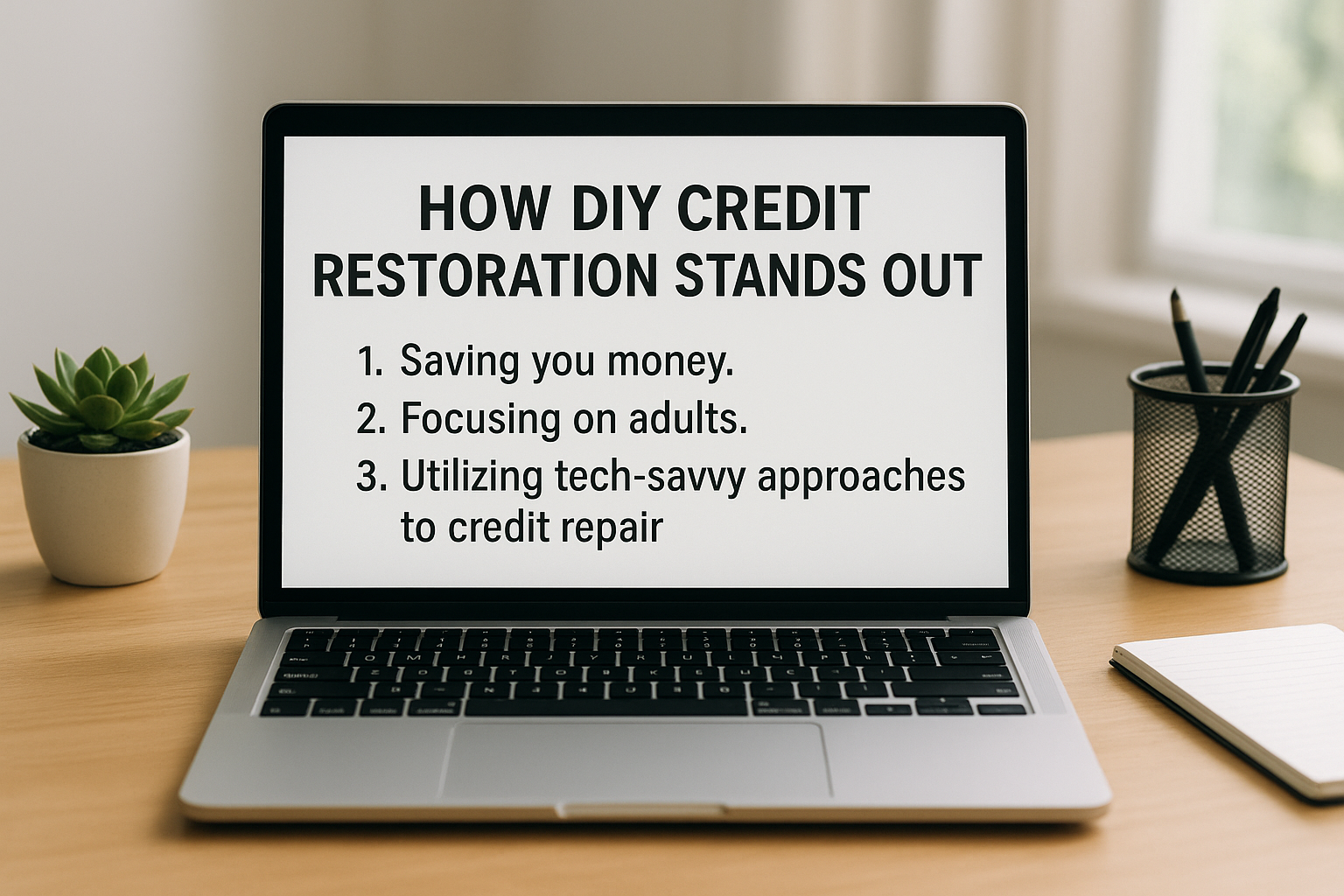
DIY credit restoration products stand out by saving you money, focusing on adults of all ages, and using tech-savvy approaches to credit repair.
Millennial Credit Advisers’ emphasis on personalized DIY credit restoration products and strategies really sets them apart in a crowded industry.
Unique Service Offerings
Millennial Credit Advisers has cost-effective DIY credit restoration products tailored to the real financial challenges adults face today.
They understand that many young adults, as well as adults of all ages, face student loans, thin credit files, and various non-standard financial situations.
Millennial Credit Advisers doesn’t just help you understand your credit report and leave it at that. They show you how to dig into your whole financial story to build strategies that actually fit your life, reduce debt, increase savings, and enhance credit.
Key services include:
- Student loan credit impact assessment
- First-time homebuyer credit preparation
- Young professional credit building programs
- Debt consolidation guidance
They use up-to-date tech and more to make understanding credit repair easier.
You’ll also find resources focused on credit scoring factors that affect younger people the most. They break down how different types of debt play into your score.
Customer Success Stories
Real clients prove Millennial Credit Advisers’ financial wellness approach works. These stories aren’t just numbers—they’re people seeing real credit score jumps in real time.
Read the story of an 181-point credit score increase that exceeded one consumer’s expectations. That opened the door to a mortgage with a significantly better rate, which saves a substantial amount over the years.
Another client, fresh out of college and buried under medical debt, got those errors wiped and worked out payment plans. Their score climbed by 89 points.
Common results include:
- Average score increases of 60-100 points
- Removal of inaccurate negative items
- Improved debt-to-income ratios
- Better loan qualification rates
They track these results across ages and situations, constantly tweaking their approach. That’s how they keep getting better at what they do, providing ideal products.
Support and Ongoing Resources
Millennial Credit Advisers doesn’t just help you understand credit repair insights and improve your financial situation. They offer ongoing education and tools to help your credit stay solid for the long haul.
Their DIY credit restoration content and guides include the best tips and really get what younger adults and adults of all ages are up against. If you’re starting from scratch, find out how to build credit the right way.
Ongoing resources include:
- Finding the best monthly credit monitoring and alerts service
- Financial literacy workshops and webinars
- Budgeting tools and debt management strategies
- Credit building recommendations
You can access Millennial Credit Advisers 24/7, 365 days a year. That flexibility aligns with how most millennials and adults prefer to communicate—quick, easy, and on their terms.
Get access to a whole library of educational content. Millennial Credit Advisers cover everything from managing credit card debt to credit and loan applications and long-term planning, helping you dodge future credit pitfalls.
Frequently Asked Questions

Credit repair costs and quality can be all over the place. How much you succeed really depends on your situation and exactly what’s dragging your score down.
What are some cost-effective strategies for improving a credit score?
If you pay credit cards down to below 30% utilization, you’ll see a fast boost. Most folks notice improvements within a month or two after lowering those balances.
You can dispute mistakes on your credit report for free. Just go straight to the bureaus online or send a letter—no need to pay anyone for that step.
Setting up automatic payments is huge. Late payments wreck your score, so letting tech handle it is a no-brainer.
Secured credit cards help you build a positive payment history if you’re just starting out. You’ll need a deposit, but they report to all three bureaus just like regular cards.
How does one evaluate the reliability of a credit repair service?
Legit companies hand over written contracts that spell out services and fees before you pay anything. They’ll explain the dispute process and what kind of timeline to expect.
Real pros never promise a specific score boost or say they can erase accurate negatives. They focus on disputing stuff that’s questionable or outdated.
You should always be able to cancel within three business days without a penalty. That’s not just good practice—it’s federal law.
Check that they’re licensed and registered in your state. Your state attorney general’s office can confirm this if you’re unsure.
What common mistakes should be avoided when choosing a credit repair provider?
Never pay upfront before any work gets done. The law says credit repair companies can’t charge you before they deliver results.
Steer clear of anyone promising instant fixes. Credit repair is a process, usually taking a few months to really see changes.
If a company tells you to create a new identity, run. That’s illegal and can land you in big trouble.
Any service that discourages you from talking to the credit bureaus yourself is sketchy. You always have the right to dispute errors directly.
Can credit repair services truly remove negative items from a credit report?
They can dispute inaccurate, incomplete, or unverifiable info. The bureaus have to check it out within 30 days and remove anything they can’t confirm.
Accurate negatives usually stay put for a set time—late payments for seven years, bankruptcies for up to ten. That’s just how the system works.
Sometimes old items drop off if creditors don’t respond to disputes. If a company’s records are sloppy, those debts might not get verified.
Paid collections often stick around, but their impact fades as you build more positive history. Time and good habits help.
What is the typical timeframe to see tangible results from credit repair efforts?
Dispute results usually show up within 30-45 days after the bureaus finish their investigation. You’ll get updated reports showing what changed.
Most people see noticeable score jumps within two or three months if the disputes work out. Sometimes, you’ll need more than one round of disputes for tougher cases.
Full credit recovery can take six months to a year, especially if you’re rebuilding from scratch. It’s a marathon, not a sprint.
If you pay down high credit card balances, you might see a quick lift. Utilization changes typically appear within just a billing cycle or two.
What should consumers look for in the terms of service when engaging a credit repair company?
Look for a clear fee structure. Companies should spell out monthly charges and any extra costs upfront.
Transparent pricing makes it so much easier to budget for credit repair. No one likes surprise fees popping up later.
Check the cancellation policy before signing anything. You want the freedom to walk away whenever, not get stuck in a long contract.
Month-to-month agreements offer way more flexibility than those year-long commitments. Most adults juggling bills and life just can’t risk getting locked in.
Some companies toss around service guarantees, like money-back offers if they don’t remove any items. But let’s be real—legit firms refund based on what they actually do, not just on results.
Communication matters, too. Make sure the company tells you how and when they’ll update you about your disputes.
Regular reports or emails help you keep tabs on what’s happening with your case. Nobody wants to be left in the dark when it comes to their credit.
Disclaimer: Millennial Credit Advisers is not a licensed credit service provider or financial advisor. We don’t offer credit repair, debt management, or legal services. Educate yourself on saving, reducing debt, and managing credit for economic improvement. Understand credit reports, scores, and financial products. Consult a financial advisor for personalized advice. Track your progress for a better credit journey.
Written content – “Please view our full AI Use Disclosure.”
We improve our products and advertising by using Microsoft Clarity to see how you use our website. By using our site, you agree that we and Microsoft can collect and use this data. Our privacy policy has more details.